


[ad_1]
*Important notice: This news reports on a paper which has been accepted and is awaiting peer review. Scientific Reports sometimes publishes preliminary scientific reports that are not peer-reviewed and, therefore, should not be regarded as conclusive or treated as established information.
A nano-ferric oxide (Fe2O3) coating applied to the base of a solar desalination pond increased water temperatures and freshwater output in outdoor, season-spanning trials, according to a new Scientific Reports study.
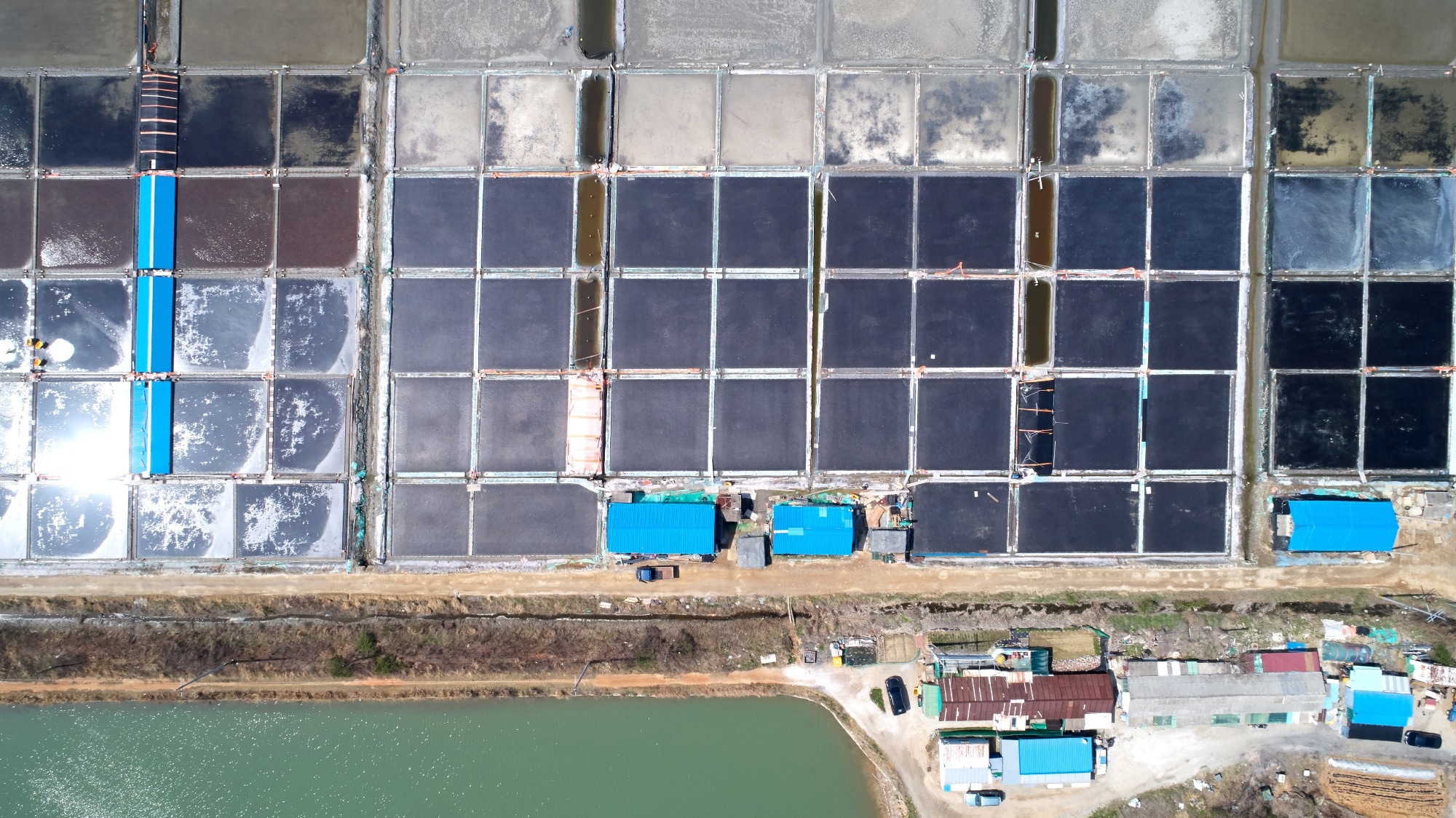 Study: Experimental and theoretical investigation of industrial solar desalination ponds enhanced with nano-ferric oxide for sustainable freshwater production. Image Credit: photo_jeongh/Shutterstock.com
Want to read this later? Click here to download a PDF!
Solar desalination ponds are attractive for off-grid water production because they can be simpler to operate than conventional solar stills and can store more heat.
Researchers have tested many efficiency tweaks: better absorbers, different geometries, and various nanomaterials, but long-duration outdoor validation paired with energy-exergy analysis and a detailed heat-and-mass transfer model has been limited.
Fe2O3 is particularly interesting as it is relatively cheap, chemically stable in saline conditions, and considered environmentally compatible.
Steel Based vs Fe2O3 Coated Performance
The researchers ran two identically sized solar desalination ponds side by side: a conventional unit with a steel base and an enhanced unit with a Fe2O3 nanostructured bottom coating.
Each pond had a 1 m2 active surface area and a 30 cm brine depth, installed at a 36° tilt (matching Tehran’s latitude) to optimise solar exposure. Both were set within insulated wooden frames and covered with a transparent glass lid to support condensation and reduce heat loss (the paper reports 5 mm glass in the setup description and 4 mm in the materials table).
Synthetic seawater was prepared using Persian Gulf salt, and measurements were taken from 06:00 to 18:00 across representative days in each season, with repeated runs and statistical testing to support the comparisons.
Note on terminology: while the paper sometimes refers to Fe2O3 “nanoplates,” microscopy results describe a predominantly nanoparticle coating.
How The Coating Was Made And Verified
The Fe2O3 nanoplates were synthesised via chemical precipitation using ferric chloride and ammonium hydroxide, then washed to remove impurities.
Characterisation using SEM, TEM, XRD, and BET indicated an average crystallite size of about 32 nm and a mesoporous structure with a high surface area of 82.6 m2/g. These properties are intended to improve solar absorption and heat transfer at the base of the pond.
What Changed In Performance
Across the outdoor trials, the enhanced pond reached a higher peak brine temperature of 74 °C, compared with 68 °C for the conventional pond, an increase of roughly 8-9 %.
Freshwater production also rose: maximum daily productivity increased from 5.1 to 6.5 L/m2/day, a 27.4 % gain. Under peak summer irradiance, the authors also report hourly productivity increases of up to about 60 %, pointing to stronger benefits when sunlight is most intense.
The paper links the improvements to higher absorptivity and reduced reflection at the base, improved heat transfer through the coated layer, and heat localisation that can help limit downward conductive losses.
Energy And Exergy: A Clearer Picture Of Efficiency
The team quantified performance beyond yield, looking at both energy and exergy metrics. Maximum thermal efficiency increased from 0.41 to 0.53, while maximum exergy efficiency rose from 5.9 % to 7.8 %.
The paper emphasises that absolute exergy efficiency remains modest because major losses and irreversibilities, especially at the glass cover and during evaporation-condensation, still dominate the system’s thermodynamic behaviour.
A coupled heat-and-mass transfer model was developed under quasi-steady assumptions and validated against the outdoor measurements.
The study reports a strong match between predicted and observed behaviour, including an R2 of about 0.985 and a root-mean-square deviation (RMSD) of 0.18 L/m2/day for distillate yield; related tabulated metrics include RMSE/MAE values for yield and temperature predictions.
Practical Considerations And Next Steps
In their study, the authors show that Fe2O3 has a useful cost-performance balance (cited at roughly 5–15 USD/kg) compared with other enhancement approaches. They note the solid bottom-coating format is intended to reduce risks associated with dispersed nanoparticles; no visible coating deterioration was reported during the test period.
At the same time, the paper calls for dedicated leaching analysis and longer-duration durability studies, including the impact of salt deposition/fouling and location-specific environmental factors such as humidity and dust.
The modelling framework could also be extended with transient formulations to better capture thermal storage effects, and the setup could be explored in hybrid configurations (for example, with external condensers or phase change materials).
Journal Reference
Farahbod F. et al. (2026). Experimental and theoretical investigation of industrial solar desalination ponds enhanced with nano-ferric oxide for sustainable freshwater production. Scientific Reports. DOI: 10.1038/s41598-026-41095-0
[ad_2]
Source link
