
Close Menu
  • Home
  • AI
  • Big Data
  • Cloud Computing
  • iOS Development
  • IoT
  • IT/ Cybersecurity
  • Tech
    • Nanotechnology
    • Green Technology
    • Apple
    • Software Development
    • Software Engineering

Subscribe to Updates

Get the latest technology news from Bigteetechhub about IT, Cybersecurity and Big Data.

    What's Hot

    Pushing thermopower to the 2D limit – Physics World

    March 14, 2026

    Protecting cities with AI-driven flash flood forecasting

    March 14, 2026

    Ways to Tell if a Website Is Fake

    March 14, 2026
    Facebook X (Twitter) Instagram
    Facebook X (Twitter) Instagram
    Big Tee Tech Hub
    • Home
    • AI
    • Big Data
    • Cloud Computing
    • iOS Development
    • IoT
    • IT/ Cybersecurity
    • Tech
      • Nanotechnology
      • Green Technology
      • Apple
      • Software Development
      • Software Engineering
    Big Tee Tech Hub
    Home»Nanotechnology»Using AI to find new particles at the LHC – Physics World
    Nanotechnology

    Using AI to find new particles at the LHC – Physics World

    big tee tech hubBy big tee tech hubNovember 17, 2025042 Mins Read
    Share Facebook Twitter Pinterest Copy Link LinkedIn Tumblr Email Telegram WhatsApp
    Follow Us
    Google News Flipboard
    Using AI to find new particles at the LHC – Physics World
    Share
    Facebook Twitter LinkedIn Pinterest Email Copy Link


    The CMS collaboration have used advanced machine learning techniques to search for new particles in jets produced by proton-proton collisions at the LHC
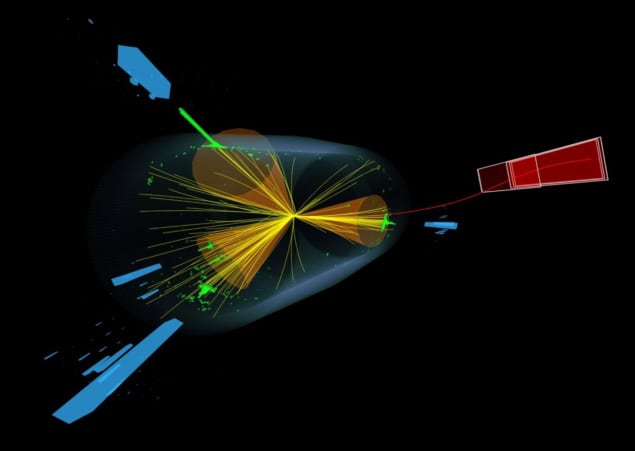
    Dijet resonances in proton-proton collisions

    A proton-proton collision producing multiple jets, as seen by the CMS detector (Courtesy: CERN)

    The Standard Model of particle physics is a very well-tested theory that describes the fundamental particles and their interactions. However, it does have several key limitations. For example, it doesn’t account for dark matter or why neutrinos have masses.

    One of the main aims of experimental particle physics at the moment is therefore to search for signs of new physical phenomena beyond the Standard Model.

    Finding something new like this would point us towards a better theoretical model of particle physics: one that can explain things that the Standard Model isn’t able to.

    These searches often involve looking for rare or unexpected signals in high-energy particle collisions such as those at CERN’s Large Hadron Collider (LHC).

    In a new paper published by the CMS collaboration, a new analysis method was used to search for new particles produced by proton-proton collisions at the at the LHC.

    These particles would decay into two jets, but with unusual internal structure not typical of known particles like quarks or gluons.

    The researchers used advanced machine learning techniques to identify jets with different substructures, applying various anomaly detection methods to maximise sensitivity to unknown signals.

    Unlike traditional strategies, anomaly detection methods allow the AI models to identify anomalous patterns in the data without being provided specific simulated examples, giving them increased sensitivity to a wider range of potential new particles.

    This time, they didn’t find any significant deviations from expected background values. Although no new particles were found, the results enabled the team to put several new theoretical models to the test for the first time.  They were also able to set upper bounds on the production rates of several hypothetical particles.

    Most importantly, the study demonstrates that machine learning can significantly enhance the sensitivity of searches for new physics, offering a powerful tool for future discoveries at the LHC.


    Source link

    Find LHC particles Physics World
    Follow on Google News Follow on Flipboard
    Share. Facebook Twitter Pinterest LinkedIn Tumblr Email Copy Link
    tonirufai
    big tee tech hub
    • Website

    Related Posts

    Pushing thermopower to the 2D limit – Physics World

    March 14, 2026

    Nanotube Composites and 3D-Printable Shields for Electronics

    March 13, 2026

    Europium nanoparticle label/lateral flow test strip integrated with a 3D-printed fluorescence smartphone reader for detection of melatonin in human blood

    March 12, 2026
    Add A Comment
    Leave A Reply Cancel Reply

    Editors Picks

    Pushing thermopower to the 2D limit – Physics World

    March 14, 2026

    Protecting cities with AI-driven flash flood forecasting

    March 14, 2026

    Ways to Tell if a Website Is Fake

    March 14, 2026

    android – Using a custom WebView instead of the main Capacitor WebView while still accessing all Capacitor plugins

    March 14, 2026
    About Us
    About Us

    Welcome To big tee tech hub. Big tee tech hub is a Professional seo tools Platform. Here we will provide you only interesting content, which you will like very much. We’re dedicated to providing you the best of seo tools, with a focus on dependability and tools. We’re working to turn our passion for seo tools into a booming online website. We hope you enjoy our seo tools as much as we enjoy offering them to you.

    Don't Miss!

    Pushing thermopower to the 2D limit – Physics World

    March 14, 2026

    Protecting cities with AI-driven flash flood forecasting

    March 14, 2026

    Subscribe to Updates

    Get the latest technology news from Bigteetechhub about IT, Cybersecurity and Big Data.

      • About Us
      • Contact Us
      • Disclaimer
      • Privacy Policy
      • Terms and Conditions
      © 2026 bigteetechhub.All Right Reserved

      Type above and press Enter to search. Press Esc to cancel.