


MoS2-based memristors can now switch between volatile and non-volatile states at low voltages, enhancing energy-efficient memory and neuromorphic devices built from 2D materials.
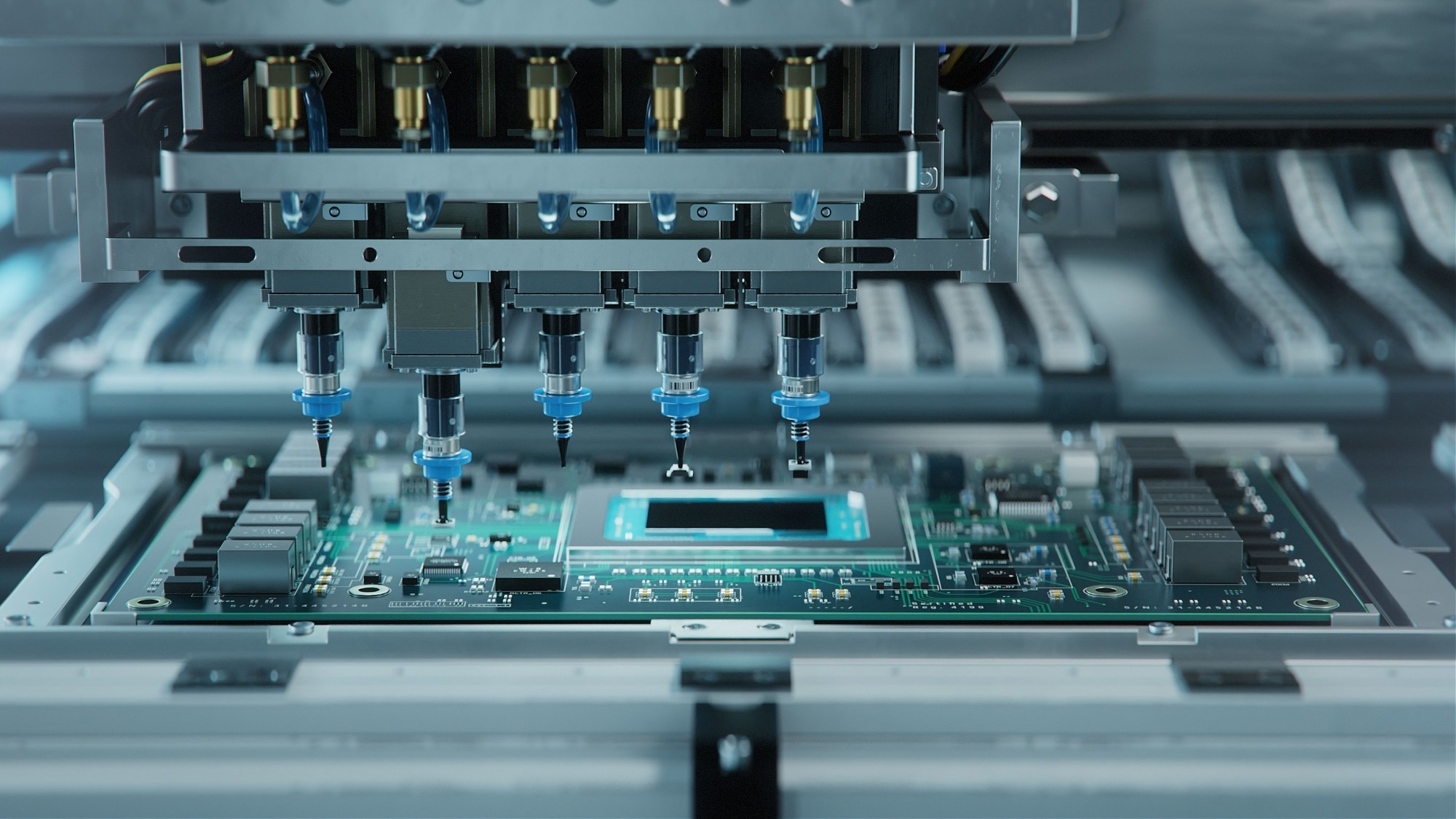 Image Credit: IM Imagery/Shutterstock.com
In a new study published in Nano Letters, researchers have shown that molybdenum disulfide (MoS2), a two-dimensional transition metal dichalcogenide, can exhibit highly controlled resistive switching behaviours at the nanoscale.
The discovery could accelerate the development of brain-inspired computing and next-generation memory technologies by enabling compact, low-power devices that replicate biological synapses.
Silicon-based Electronics are a Thing of the Past
Traditional silicon-based electronics are running into fundamental limitations. This is particularly true regarding energy efficiency and scaling complexity for neuromorphic systems.
MoS2 offers an alternative with its atomically layered structure that allows for precise engineering at the nanoscale, supporting both volatile (short-term) and nonvolatile (long-term) memory behaviours. These traits are crucial for mimicking the way real synapses store and process information.
To explore this potential, researchers from RWTH Aachen University fabricated lateral MoS2 memristive devices using metal-organic chemical vapor deposition to produce multilayer MoS2 films on sapphire substrates.
After transferring the films onto SiO2/Si wafers, they used lithography and ion etching to define precise device geometries, reaching channel lengths of just 250 nm.
A combination of palladium, silver, and aluminium contacts completed the structure, which was then analyzed through transmission electron microscopy (TEM) and electrical measurements.
Dual-Mode Behaviour for Retention and Repeatability
The researchers found that the devices exhibited forming-free resistive switching, meaning they required no initial voltage spike to begin functioning, and could toggle between high and low resistance states at voltages as low as 0.16 V.
These transitions were driven by the controlled formation and dissolution of conductive filaments within the MoS2 layers, likely due to ion migration and sulfur vacancy dynamics. In situ TEM imaging and EDXS mapping provided atomic-scale insight into how these filaments form and dissipate in real time.
Crucially, the team observed that the same device could be tuned to operate in either volatile or nonvolatile mode by adjusting voltage magnitude and duration.
This was initially framed in terms of voltage magnitude and duration, but the study shows that current compliance, a parameter limiting the maximum current during operation, is the central control mechanism. By adjusting current compliance, the researchers could reliably switch between temporary and permanent resistance states.
This dual-mode behaviour opens new possibilities for multi-functional memory and processing units, particularly in artificial intelligence systems that need to simulate both short-term and long-term memory functions.
Beyond confirming the fundamental switching mechanism, the researchers also demonstrated reliable memory retention and repeatability, even in such ultra-thin devices. Their findings suggest that engineers can precisely tune device performance by tailoring the thickness and defect profile of the MoS2 layers.
As neuromorphic computing continues to advance, materials that bridge performance, efficiency, and scalability will be essential. MoS2 is already proving itself in the lab, and may soon underpin the next generation of adaptive, high-density memory systems.
Journal Reference
Cruces S., et al. (2025). Coexistence of Volatile and Nonvolatile Resistive Switching in Lateral MoS2-Based Memristors. Nano Letters, 25, 12455−12462. DOI: 10.1021/acs.nanolett.5c01992.m,
