


Ultrasound-triggered nanobubbles briefly loosen the tumour’s collagen scaffold, helping RNA-loaded lipid nanoparticles spread deeper and return stronger immune responses in early mouse tests.
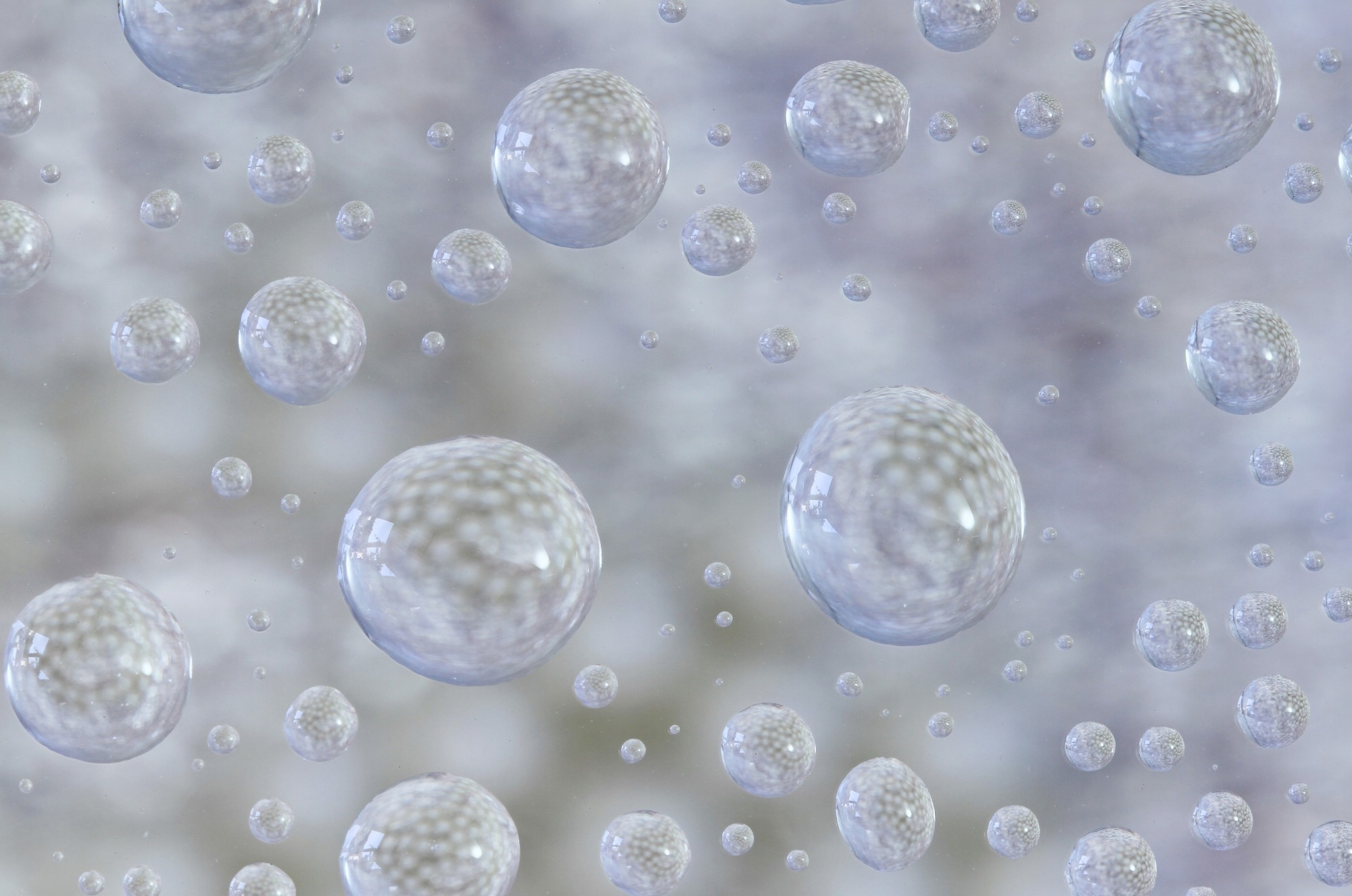 Study: Enhanced Delivery of Lipid Nanoparticle-Based Immunotherapy by Modulating the Tumor Tissue Stiffness Using Ultrasound-Activated Nanobubbles. Image Credit: Sanit Fuangnakhon/Shutterstock.com
The research, published in ACS Nano, studies the role of ultrasound activation of nanobubbles in solid tumors. The team assessed the capacity of US-NBs to mechanically remodel the extracellular matrix, reduce tumor stiffness, and increase tissue permeability under controlled ultrasound exposure.
Want to read this later? Click here to download a PDF!
Elevated extracellular matrix (ECM) stiffness drives tumor progression and reduces the effectiveness of immunotherapy in solid tumors. This is exacerbated by excess collagen deposition and protein cross-linking, which increase tissue rigidity, limit immune-cell infiltration, and hinder therapeutic transport.
Lipid nanoparticles (LNPs) serve as efficient carriers for ribonucleic acid (RNA) delivery, however, high interstitial pressure and dense stromal architecture restrict their distribution within tumors.
Although researchers have used ultrasound-mediated microbubble cavitation to increase vascular permeability, its ability to remodel the interstitial ECM and improve nanoparticle dispersion has not been widely studied.
This study addressed that gap, evaluating the use of ultrasound-activated nanobubbles as a mechanical strategy to reduce ECM stiffness and improve tumor permeability in a murine breast cancer model.
Synthesis and Application of the Nanobubbles
The researchers first synthesized phospholipid-shelled nanobubbles encapsulating perfluoropropane gas. The nanobubbles exhibited an average diameter of approximately 280 nm, stable surface charge, and strong acoustic responsiveness, properties that supported uniform distribution within tumor tissue after intratumoral injection.
They established E0771.LMB murine breast tumors at volumes of 40-60 mm3 to ensure a well-developed extracellular matrix before treatment.
The team injected nanobubbles directly into the tumors and immediately applied therapeutic ultrasound at 3.3 MHz and 2.2 W with a 50 % duty cycle for one minute. Tumor stiffness was measured longitudinally using shear wave elastography over five days to quantify biomechanical changes.
Histological analysis was performed using Picrosirius Red staining to evaluate collagen content and matrix remodeling, and apoptosis markers were assessed to confirm preserved cell viability following ultrasound exposure.
Contrast-enhanced ultrasound imaging verified effective cavitation.
The team administered lipid nanoparticles encapsulating small interfering RNAs targeting PD-1 and CTLA-4 with ultrasound-activated nanobubbles for therapeutic evaluation. Fluorescent labeling enabled visualization of nanoparticle distribution within the tumor.
Flow cytometry quantified cellular uptake and gene transfection across immune populations. Multiplex assays measured cytokine and chemokine expression, and the researchers analyzed immune activation in both primary tumors and tumor-draining lymph nodes to assess systemic immune responses after a short treatment course of three combined US-NB/LNP doses spaced three days apart.
For a separate GFP reporter transfection experiment, mice were pre-treated with c-di-GMP to enrich intratumoral T cells before LNP delivery.
Nanobubble Activation and Performance
The results showed that ultrasound-activated nanobubbles distribute uniformly throughout tumor tissue, whereas larger microbubbles remain confined near injection sites.
Upon ultrasound activation, these nanobubble cavities generated localized mechanical forces that markedly reduced tumor stiffness.
Shear wave elastography showed an immediate decrease to approximately 35 % of baseline stiffness, with sustained softening over five days, whereas untreated tumors progressively stiffened.
Histological analysis confirms extensive extracellular matrix remodeling, with collagen deposition reduced by more than fivefold and fiber alignment becoming more randomly oriented.
Apoptosis markers remain unchanged, indicating mechanical reorganization rather than tissue ablation. This biomechanical normalization directly enhances nanoparticle delivery.
Without nanobubble activation, lipid nanoparticles (LNPs) remain concentrated near the injection core. In contrast, ultrasound-activated nanobubbles promote widespread intratumoral distribution, including peripheral regions.
Immune-cell uptake of LNPs increases more than twofold, and intracellular nanoparticle levels double.
Gene transfection efficiency increases accordingly, with GFP reporter expression increasing across immune populations and CD4+ T cells exhibiting a sixfold improvement, overcoming their typical resistance to nanoparticle uptake.
Immune profiling further demonstrated the functional reprogramming of the tumor microenvironment.
Chemokines CXCL10 and CCL2 increased by approximately twofold, supporting immune cell recruitment. Pro-inflammatory cytokines rise, while immunosuppressive IL-10 declines. HMGB1 levels increased markedly, consistent with heightened tumor immunogenicity.
Myeloid-derived suppressor cells decrease tenfold, tumor-infiltrating T cells increase sixfold, and antigen-presenting macrophages and dendritic cells expand.
Activated CD44+ T cells increased in both tumors and draining lymph nodes. Collectively, these results demonstrated that mechanical extracellular matrix normalization enhances nanoparticle delivery and amplifies antitumor immune activation.
Looking Forward
The researchers say ultrasound-activated nanobubbles offer a practical way to make solid tumours more responsive to immunotherapy by physically changing the tumour microenvironment.
In the study, carefully controlled cavitation softened the extracellular matrix, disrupted collagen organisation, and made tumour tissue more uniform, without signs of widespread cell death.
Using mechanical testing, tissue staining, and immune profiling, the team links this tumour softening to improved lipid nanoparticle performance: they spread further through the tumour, are taken up more readily by cells, and deliver their RNA payload more effectively.
That, in turn, improved functional delivery of the LNP-based immunotherapy inside tumours. The researchers argue the same strategy could help overcome stromal resistance in other solid cancers, but say the next steps are to fine-tune ultrasound settings, track longer-term safety, and test additional combination regimens as the approach moves towards clinical use.
Journal Reference
Bhalotia, A., et al. (2026). Enhanced Delivery of Lipid Nanoparticle-Based Immunotherapy by Modulating the Tumor Tissue Stiffness Using Ultrasound-Activated Nanobubbles. ACS Nano, 20(5), 4592–4606. DOI: 10.1021/acsnano.5c21787
