


Empowering Technicians Across Every Store
7‑Eleven’s maintenance technicians keep stores running smoothly by servicing a wide range of equipment — from food service appliances and refrigeration units to fuel dispensers and Slurpee machines. Each repair relies on the technician’s knowledge and immediate access to supporting documents, such as service manuals, wiring diagrams, and annotated images.
Creating a Unified and Faster Way for Technicians to Find Equipment Information
Over time, equipment documentation has evolved to include multiple formats, spread across various locations. This makes it harder for Technicians to locate the information they need quickly. Moreover, when encountering unfamiliar equipment, parts, etc., Technicians would often rely on chat or email to get support from their peers.
As such, an opportunity to streamline how information is accessed, shared, etc. was identified; ultimately resulting in more consistent support for store operations.
Building the Technician’s Maintenance Assistant (TMA)
To tackle these challenges, 7‑Eleven envisioned an AI‑powered assistant that could:
- Retrieve precise answers from maintenance documents.
- Identify equipment parts from images and suggest related materials.
- Integrate seamlessly within Microsoft Teams.
Partnering with Databricks, 7-Eleven developed the Technician’s Maintenance Assistant (TMA), an intelligent solution that integrates document retrieval, vision models, and collaboration into a streamlined workflow.
Document Storage and Indexing
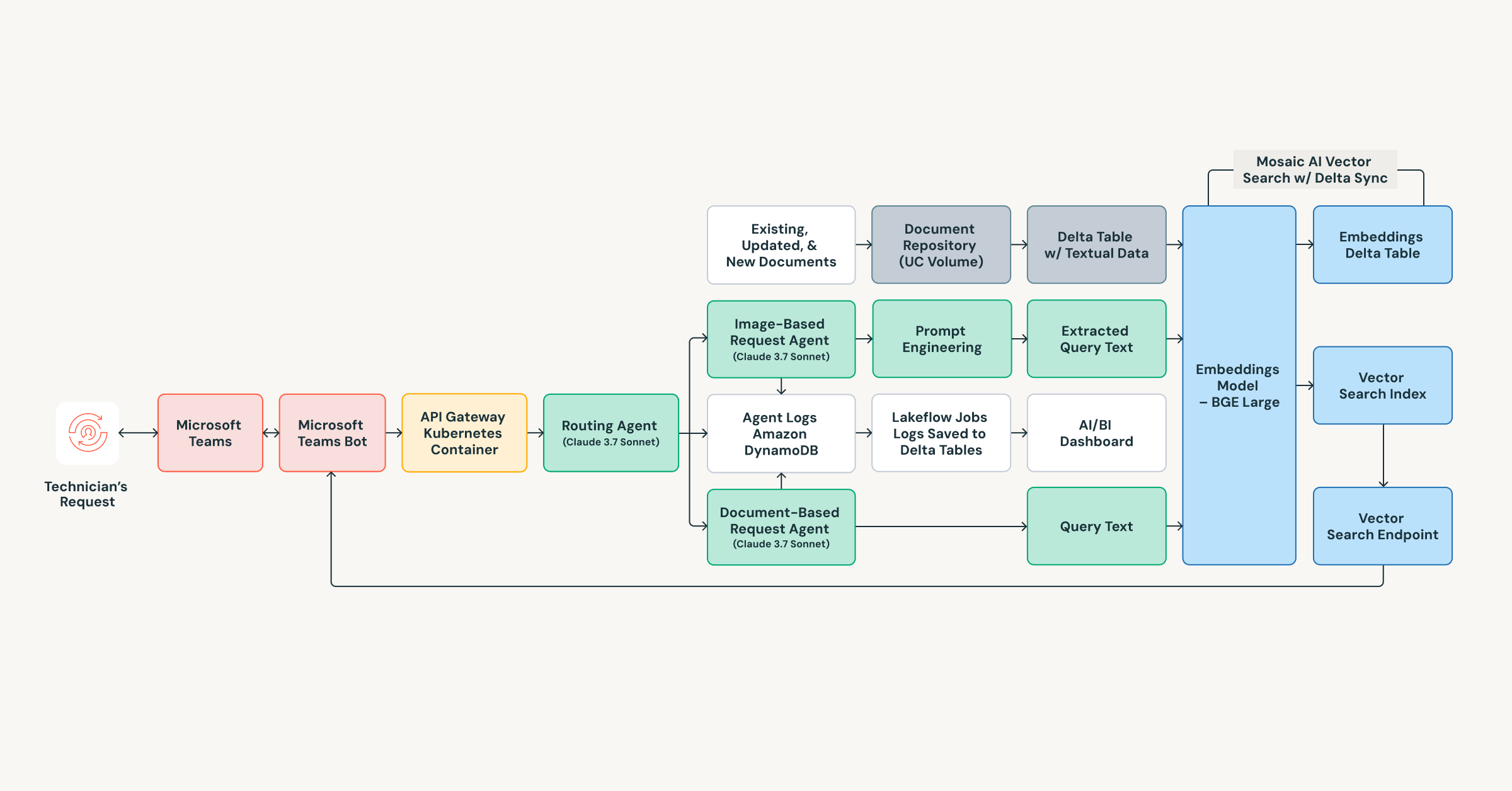
All relevant maintenance documents were uploaded to a Unity Catalog Volume, which manages permissions for non-tabular data, such as text and images, across cloud storage.
Using Databricks Vector Search, the development team implemented Delta Sync with Embeddings Compute. They generated vector embeddings using the BAAI bge-large-en-v1.5 model, and served them through a Vector Search endpoint for high-speed, low-latency retrieval.
Microsoft Teams Integration
Technicians access TMA directly through Microsoft Teams. A Teams Bot routes each query through an API layer that orchestrates calls to Databricks Model Serving. The assistant provides contextual answers, matches documentation links, and suggests relevant parts directly in the chat window.
Routing Agent and Sub‑Agent Design
A Routing Agent determines whether a technician’s query is document-based or image-based, directing it to the correct sub-agent:
- Document Question and Answer Agent
- Technicians can use natural language queries within Teams. With Claude 3.7 Sonnet via Databricks Model Serving, the system converts these queries into vector embeddings, searches the index, and returns context-aware answers using Retrieval-Augmented Generation (RAG). Technicians receive responses instantly, even from long manuals or equipment guides.
- Image Identification Agent
- Early versions used straightforward text extraction via Claude 3.7 Sonnet but yielded uneven results. Engineers enhanced performance by tailoring prompts to technician workflows — covering product numbers, manufacturer details, specifications, safety warnings, and certification dates.
- The extracted data maps directly to Delta Table fields, linking visual references to the correct documents in the vector index. This refinement produced more accurate and reliable part recognition.
Logging and Analytics
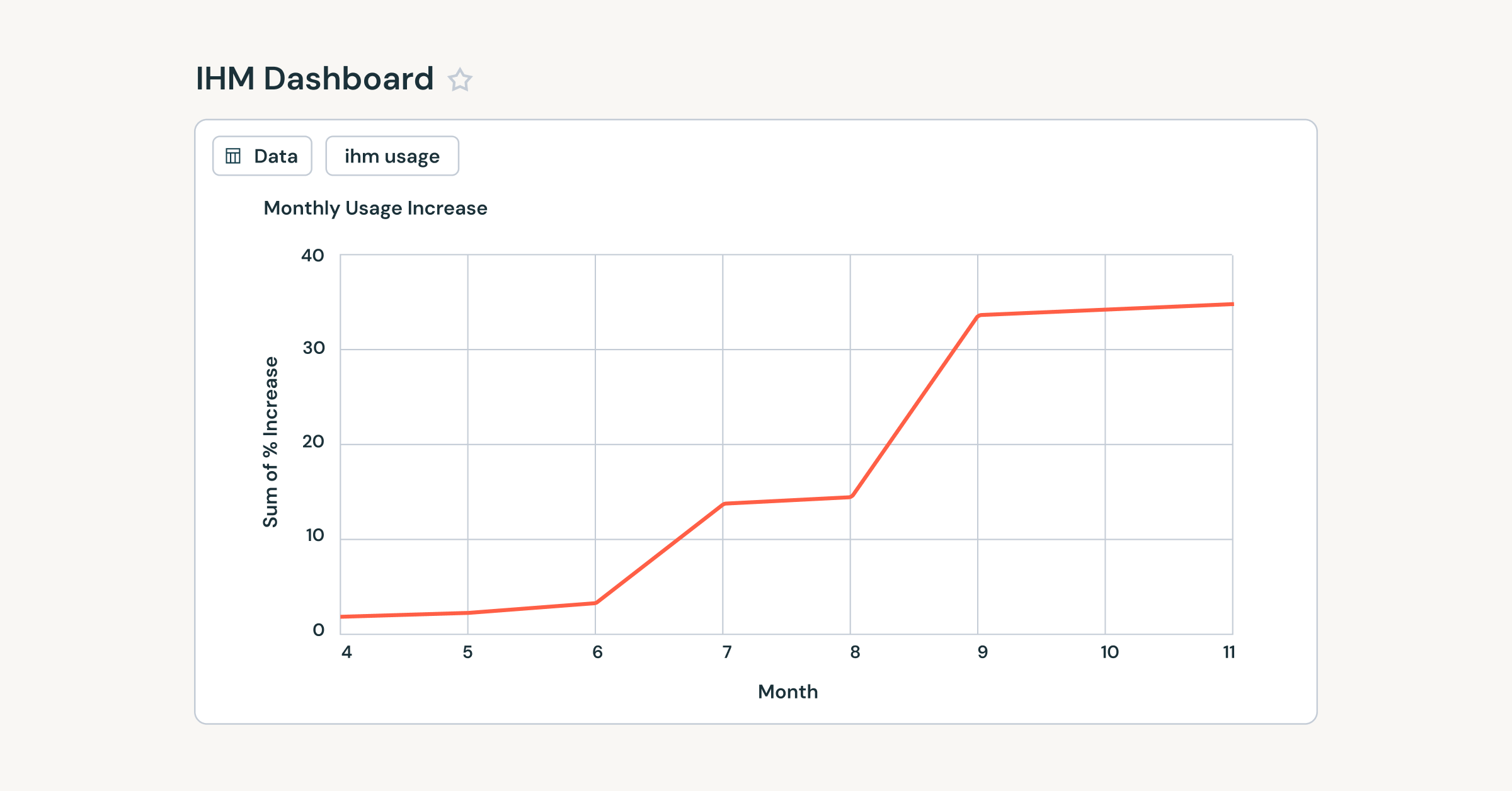
To maintain transparency and data governance, all interactions — routing, queries, and image requests — are logged in Amazon DynamoDB. A daily Databricks Job extracts these logs, stores them in Delta tables, and powers a dedicated AI/BI Dashboard.
The dashboard gives 7‑Eleven visibility into:
- Daily/Weekly/Monthly (see below) query volume by technician.
- Most frequently searched for or serviced equipment.
- Chatbot resolution trends and latency.
- Correlation between TMA adoption and improved first‑time‑fix rates.
Migration from AWS to Databricks
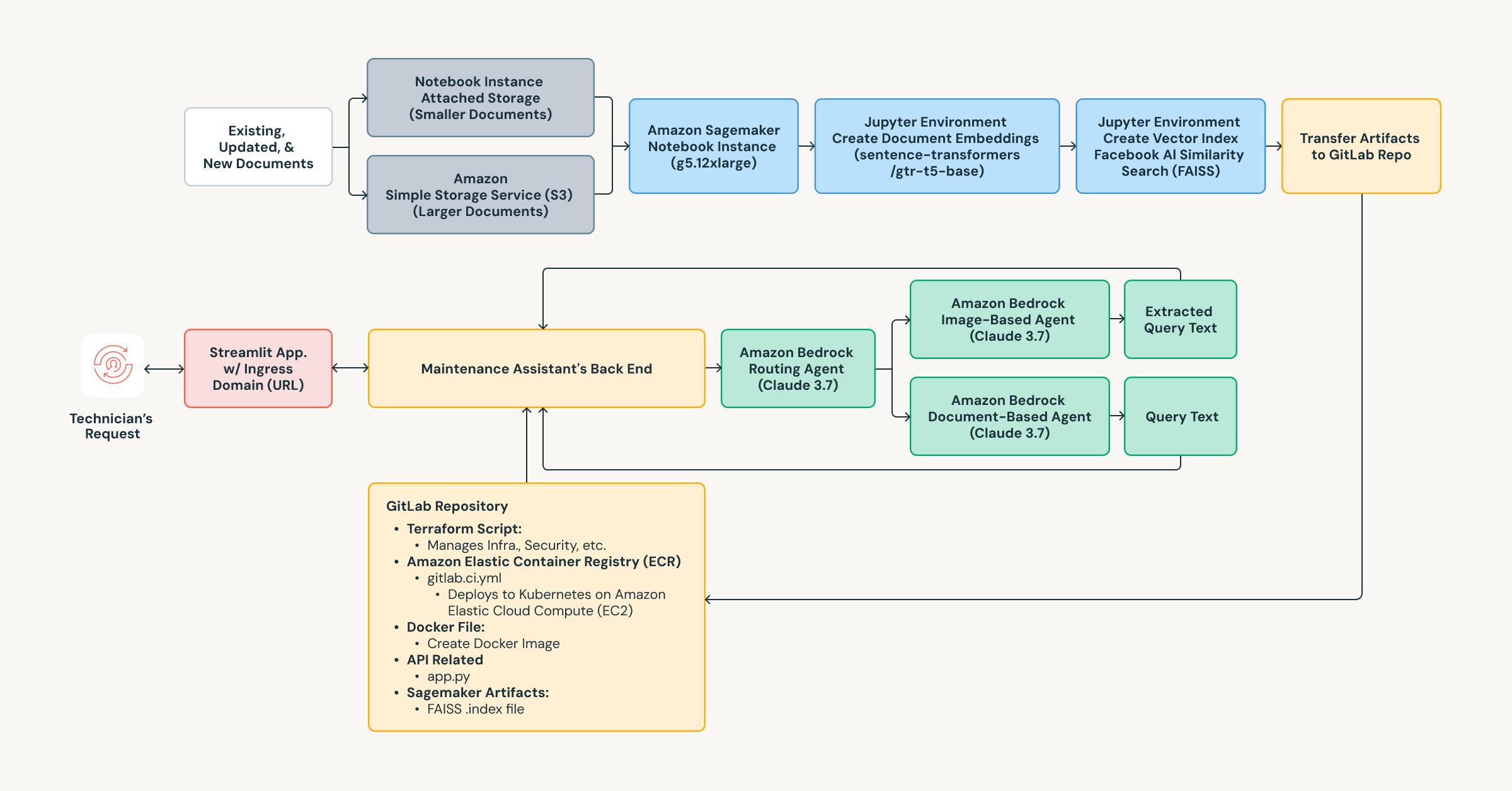
The first proof of concept utilized AWS components, including SageMaker, FAISS, and Bedrock, to host large language models such as Claude 3.7 Sonnet and Llama 3.1 405B. While functional, this setup required manual reindexing, several detached services, and introduced latency.
To simplify its infrastructure, 7-Eleven migrated to a fully Databricks Agent Bricks solution, end-to-end, which resulted in accelerated response times.
Key improvements:
- Automated vector indexing with Databricks Vector Search.
- Unified data governance and compute management.
- Lower latency and simplified observability through a single lakehouse architecture.
Delivering Operational Impact
“From what I’ve experienced so far, the Technician’s Maintenance Assistant has the potential to greatly improve the speed, accuracy, and consistency with which our technicians access critical documentation for preventive maintenance and equipment repair,” said James David Coterel, Corporate Maintenance Trainer at 7‑Eleven.
By streamlining document retrieval and reducing dependency on peer support, the TMA enhances technician confidence, improves first-time-fix rates, and cuts search time from minutes or even hours to seconds; directly reducing downtime and accelerating store readiness.
In parallel, shifting retrieval, embeddings, and inference from AWS to Databricks eliminated FAISS maintenance and EC2 load, lowering infrastructure overhead and improving latency, which compounded into measurable operational savings and a more consistent customer experience.
While the exact dollar impact is still being measured, the combination of faster first-time resolution, fewer manual escalations, and lower infrastructure overhead creates clear cost avoidance on labor hours and unplanned equipment downtime, both of which correlate strongly with store revenue protection and customer experience stability.
Future Enhancements
7‑Eleven plans to expand TMA’s capabilities through:
- Video-based maintenance guides for visual and hands‑on learning.
- Multilingual support for global maintenance teams.
- Data‑driven feedback loops to continuously refine response accuracy and relevance.
Discover how Databricks enables enterprises like 7-Eleven to build intelligent assistants that integrate data, documents, and vision models on a single platform.
Explore Databricks AI Solutions
