


When the power goes out, or you need electricity away from home, the choice usually comes down to two options: a portable power station or a traditional generator. Both do the same basic job, but they do it in very different ways.
A portable power station stores electricity in a battery and sends it out through an inverter. A generator burns fuel to make electricity on demand. In practice, that difference affects everything, noise, safety, upkeep, running time, and the kind of devices each one can handle.
If you want quiet, simple backup for small to medium devices, a portable power station is usually the better fit. If you need to run heavy tools, large appliances, or power for many hours without stopping, a traditional generator is usually the stronger choice.
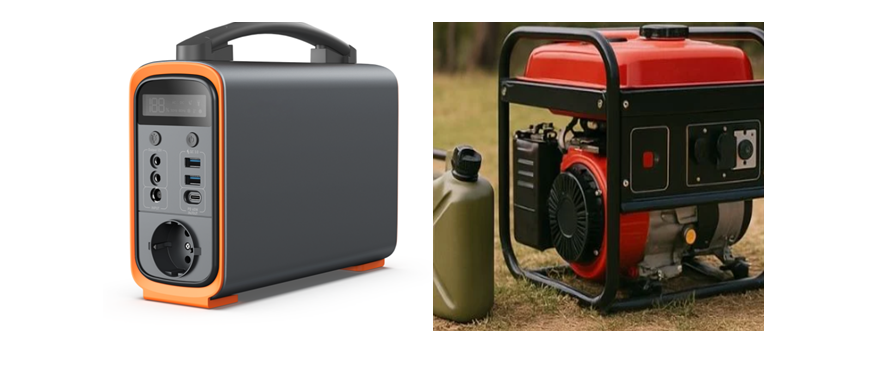
What is a portable power station?
A portable power station is a large rechargeable battery with built-in outlets, USB ports, and an inverter. You charge it from a wall outlet, a car, or solar panels, then use it later to power devices.
Most models are compact enough to carry, and many can run several devices at once. They are popular for camping, short outages, van life, and backup power for phones, laptops, lights, routers, and some small appliances.
What is a traditional generator?
A traditional generator uses a gasoline, diesel, or propane engine to produce electricity. Instead of storing power in advance, it creates power while fuel is burning.
Generators handle higher loads better than most portable power stations. That makes them common on construction sites, during long outages, and anywhere heavy-duty equipment is involved. The tradeoff is clear, they are louder, heavier, and need fuel, ventilation, and regular maintenance.
The main difference at a glance
| Feature | Portable Power Station | Traditional Generator |
| Power source | Stored battery energy | Fuel combustion |
| Noise | Very quiet | Loud |
| Exhaust | None | Produces fumes |
| Indoor use | Yes | No |
| Portability | Easy to move | Often heavy |
| Ease of use | Plug and play | Requires startup and fueling |
| Maintenance | Low | Regular upkeep needed |
| Output power | Best for small to medium loads | Better for high loads |
| Runtime | Limited by battery size | Limited by fuel supply |
| Running cost | Low after purchase | Ongoing fuel cost |
| Best use | Camping, short outages, mobile work | Job sites, long outages, large appliances |
Which one is better for different situations?
Camping and outdoor trips
For most campers, a portable power station is the better choice. It is quiet, clean, and easy to carry. It can charge phones, cameras, drones, lights, and laptops without the noise and smell of a fuel engine.
A generator only makes more sense outdoors if you need to run high-watt devices like an electric cooker, a large cooler, or several appliances at once.
Home backup power
For short outages, a portable power station is often enough. It works well for lights, phones, Wi-Fi, CPAP machines, and sometimes a refrigerator for a limited time. It also works indoors, which matters during bad weather.
For longer outages, a generator usually wins. It can keep larger appliances running longer as long as you have fuel. If your goal is to support a fridge, freezer, sump pump, or more than one room for many hours, a generator is the stronger option.
Construction or job site use
Generators still lead here. They handle saws, drills, compressors, and other power-hungry tools more reliably.
Some larger portable power stations can run smaller tools, and they are easier to move around. Still, for demanding site work, a generator remains the more practical choice.
RV and van travel
Portable power stations fit RV and van travel well because they are quiet and easy to use. They work as an extra power source for electronics, lighting, and light appliance use.
Generators still have a place in RV setups when higher loads matter. Many travelers end up using both, a power station for daily quiet use, and a generator when they need more power or faster recharging.
Emergency response
Portable power stations are quick to deploy. You press a button and start using them. That makes them useful for urgent lighting, communication gear, and medical devices.
Generators are better for extended emergency work, especially when teams need steady high output. In larger response settings, the two are often used together.
Where portable power stations stand out
Portable power stations are best when convenience matters most. They are quiet, clean, and simple. You do not need fuel cans, oil changes, or pull starts. You can use them indoors without dealing with exhaust. For many people, that alone makes the decision easier.
They also pair well with solar panels, which adds flexibility for off-grid use or longer emergencies. Over time, they feel less like backup equipment and more like a useful part of daily life.
Their biggest limit is battery size. Once the stored energy is used up, you need time and a charging source to refill it.
Where generators still make more sense
Generators are built for high demand and long runtime. They are better at running large appliances, job site equipment, and backup systems that need steady power for hours or days.
They are also easier to keep going during a long outage if fuel is available. You refill and continue. That matters when the outage lasts longer than expected.
The downside is familiar, noise, fumes, maintenance, and a little more work every time you use one. They also need to stay outside in a well-ventilated area.
What to check before you buy
Power needs
Start with the devices you actually want to run. A phone and a laptop need very little power. A fridge, microwave, heater, or air conditioner needs much more.
Use this formula:
Required capacity (Wh) = Device power (W) × Hours of use × 1.2
Example:
| Device | Power | Time | Safety Margin | Required Capacity |
| Refrigerator | 150 W | 8 hours | ×1.2 | 1,440 Wh |
For that kind of use, you would look for a power station around 1,500 Wh or higher, assuming the fridge’s startup surge stays within the unit’s output rating.
Where and how often you will use it
This part matters more than many people expect. If you need backup a few times a year for phones, lights, and internet, a power station usually covers the job. If you lose power often, work outdoors, or need to run equipment for long stretches, a generator makes more sense.
Budget
Generators often cost less upfront for the amount of power they provide. Portable power stations usually cost more at the start, especially larger models.
But the full cost is different from the sticker price. A generator keeps costing money through fuel, oil, filters, and service. A power station costs more to buy, but much less to run.
Comfort and environmental concerns
Portable power stations are easier to live with. They are quiet, have no exhaust, and work in places where a generator would be a headache.
Generators are better suited to open outdoor areas where noise and fumes are less of a problem.
Skill and upkeep
A power station is simple. Charge it, store it, turn it on, use it.
A generator asks more from you. You need to fuel it safely, maintain the engine, and use it correctly outdoors. For some buyers that is normal. For others, it becomes the reason they stop using it.
A mixed setup often works best
For many households, the smartest setup is not choosing one over the other. It is using both for different jobs.
A portable power station covers daily backup needs, short outages, indoor use, camping, and quiet power. A generator takes over when the outage gets serious or the load gets heavy.
Add solar panels to the power station, and the setup becomes even more useful. You can recharge during the day and use stored power at night. That will not replace a generator in every case, but it reduces how often you need one.
FAQ
Can I use a portable power station indoors?
Yes. Portable power stations do not produce exhaust, so they are safe for indoor use.
Can I use a generator indoors?
No. Generators produce carbon monoxide and must only be used outdoors in a well-ventilated area.
How long does a portable power station last?
That depends on battery type, usage, and charging habits. Many good models last several years, and their batteries often handle hundreds to thousands of charge cycles before capacity drops noticeably.
Can a portable power station run a refrigerator?
Yes, many can, but only if the battery capacity is large enough and the output rating can handle the fridge’s startup surge.
Can I charge a portable power station with solar panels?
Yes. Many models support solar charging, which is one of their main advantages for off-grid use and emergency backup.
Which is cheaper over time?
A generator often costs less upfront, but fuel and maintenance add up. A power station usually costs more to buy, but less to operate.
Final takeaway
If you want quiet, clean, low-maintenance power for smaller devices and short outages, a portable power station is usually the better choice. If you need longer runtime, higher output, or support for heavy tools and large appliances, a traditional generator is still the better fit.
For many people, the real answer is not either-or. A power station handles most everyday needs with less hassle, and a generator covers the heavier work when battery power is not enough. That balance gives you more flexibility, and in real life, that matters more than picking a single winner.
