
Close Menu
  • Home
  • AI
  • Big Data
  • Cloud Computing
  • iOS Development
  • IoT
  • IT/ Cybersecurity
  • Tech
    • Nanotechnology
    • Green Technology
    • Apple
    • Software Development
    • Software Engineering

Subscribe to Updates

Get the latest technology news from Bigteetechhub about IT, Cybersecurity and Big Data.

    What's Hot

    A deep dive into Apple’s AI strategy reset, as it prepares to announce a Gemini-powered personalized Siri next month and a reimagined chatbot-like Siri at WWDC (Mark Gurman/Bloomberg)

    January 25, 2026

    European Space Agency’s cybersecurity in freefall as yet another breach exposes spacecraft and mission data

    January 25, 2026

    The human brain may work more like AI than anyone expected

    January 25, 2026
    Facebook X (Twitter) Instagram
    Facebook X (Twitter) Instagram
    Big Tee Tech Hub
    • Home
    • AI
    • Big Data
    • Cloud Computing
    • iOS Development
    • IoT
    • IT/ Cybersecurity
    • Tech
      • Nanotechnology
      • Green Technology
      • Apple
      • Software Development
      • Software Engineering
    Big Tee Tech Hub
    Home»Green Technology»UK project sets out the world’s first roadmap to a circular space economy
    Green Technology

    UK project sets out the world’s first roadmap to a circular space economy

    big tee tech hubBy big tee tech hubDecember 4, 2025023 Mins Read
    Share Facebook Twitter Pinterest Copy Link LinkedIn Tumblr Email Telegram WhatsApp
    Follow Us
    Google News Flipboard
    UK project sets out the world’s first roadmap to a circular space economy
    Share
    Facebook Twitter LinkedIn Pinterest Email Copy Link


    UK project sets out the world’s first roadmap to a circular space economy
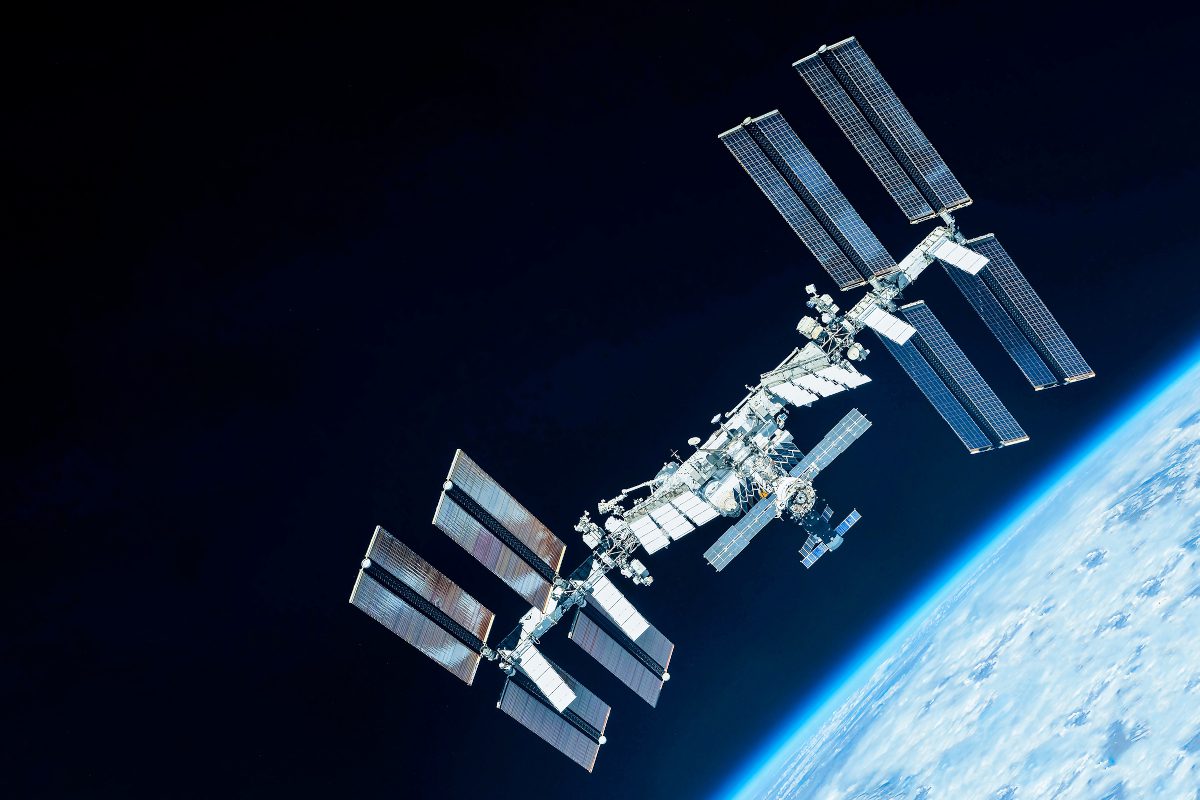
    The International Space Station (elements of this image furnished by NASA).

    From reusable rockets to space stations that could one day recycle floating debris into new materials, a first-of-its-kind study from the University of Surrey and the UK Space Agency sets out the world’s first roadmap to a circular space economy.

    Published in Chem Circularity, the research investigates how circular economy principles could transform the way the space sector designs, builds and operates missions both on Earth and beyond. It identifies where reusability, repair and in-orbit recycling could replace today’s single-use practices – and argues that, in space, in-orbit repair and recycling must become a priority rather than a last resort.

    With more than 8,000 satellites already orbiting Earth and thousands more planned, demand for critical materials such as titanium, lithium and rare earth elements is expected to soar unless the sector adopts more sustainable approaches.

    The paper also highlights how advances in chemistry, materials science and artificial intelligence could make this circular future possible – from materials that can repair themselves to digital twin simulations that allow for less physical testing.

    “Each rocket launch sends tonnes of valuable materials into space that are never recovered,” said Professor Jin Xuan, Associate Dean (Research and Innovation). “To make the space economy truly sustainable, we need to build circular thinking into missions from the very start – from how we design and manufacture spacecraft to how we operate and retire them. That means developing systems that can be refuelled, repaired or reconfigured in orbit, and materials that can be recovered and recycled rather than lost.”

    “Our goal was to understand where circular principles make the biggest impact. It’s clear there are big opportunities to reuse and recover materials efficiently. Other industries have already set the blueprint for circular design, and now it’s time to bring that thinking into this multi-billion-pound space economy,” said Zhilin yang, PhD researcher in Circular Economy at the University of Surrey, and lead author of the study.

    Looking to other industries already tackling similar sustainability challenges, the paper highlights valuable lessons that could be applied to the space sector. The electronics industry, for example, has developed ways to recover precious metals from discarded devices, while the automotive sector has shown how repairing and remanufacturing components can keep vehicles on the road for longer and cut waste. Adapting these approaches for the extreme conditions of space could prove vital for creating spacecraft that last longer, waste less and support a more resilient circular space economy.

    Professor Adam Amara, Head of the School of Mathematics and Physics, said:
    “The space sector is at a turning point. For decades, we’ve relied on a one-way flow of materials from Earth to orbit – but that model isn’t sustainable. We need to rethink how we use what’s already out there. The same debris that threatens satellites today could become the raw material for tomorrow’s missions – recycled into new components, repurposed for refuelling or even 3d-printed into replacement parts. Advances in AI and smarter design are already showing how we can turn waste into opportunity and make space exploration more sustainable.”

    Previous work at Surrey on sustainable space engineering includes the RemoveDEBRIS mission, one of the world’s first successful in-orbit demonstrations of capturing space debris.

    The study – funded by the Engineering and Physical Sciences Research Council (EPSRC), the Leverhulme Trust and the Surrey–Adelaide Partnership Fund – marks the first step in a longer-term programme to develop the technologies and governance frameworks needed for a truly circular space economy, said the group.

    yH5BAEKAAEALAAAAAABAAEAAAICTAEAOw==


    Source link

    Circular economy Project roadmap sets Space Worlds
    Follow on Google News Follow on Flipboard
    Share. Facebook Twitter Pinterest LinkedIn Tumblr Email Copy Link
    tonirufai
    big tee tech hub
    • Website

    Related Posts

    European Space Agency’s cybersecurity in freefall as yet another breach exposes spacecraft and mission data

    January 25, 2026

    Ambient-air power start-up secures £2m seed round funding

    January 25, 2026

    Your iPhone is out of space again—This app fixes that for $20

    January 24, 2026
    Add A Comment
    Leave A Reply Cancel Reply

    Editors Picks

    A deep dive into Apple’s AI strategy reset, as it prepares to announce a Gemini-powered personalized Siri next month and a reimagined chatbot-like Siri at WWDC (Mark Gurman/Bloomberg)

    January 25, 2026

    European Space Agency’s cybersecurity in freefall as yet another breach exposes spacecraft and mission data

    January 25, 2026

    The human brain may work more like AI than anyone expected

    January 25, 2026

    Non-Abelian anyons: anything but easy

    January 25, 2026
    About Us
    About Us

    Welcome To big tee tech hub. Big tee tech hub is a Professional seo tools Platform. Here we will provide you only interesting content, which you will like very much. We’re dedicated to providing you the best of seo tools, with a focus on dependability and tools. We’re working to turn our passion for seo tools into a booming online website. We hope you enjoy our seo tools as much as we enjoy offering them to you.

    Don't Miss!

    A deep dive into Apple’s AI strategy reset, as it prepares to announce a Gemini-powered personalized Siri next month and a reimagined chatbot-like Siri at WWDC (Mark Gurman/Bloomberg)

    January 25, 2026

    European Space Agency’s cybersecurity in freefall as yet another breach exposes spacecraft and mission data

    January 25, 2026

    Subscribe to Updates

    Get the latest technology news from Bigteetechhub about IT, Cybersecurity and Big Data.

      • About Us
      • Contact Us
      • Disclaimer
      • Privacy Policy
      • Terms and Conditions
      © 2026 bigteetechhub.All Right Reserved

      Type above and press Enter to search. Press Esc to cancel.