


As Tax Day looms and last-minute taxpayers feel the pressure, a surge of IRS scams is on the rise.
Research by our McAfee Labs team projects a fresh wave of sophisticated tax scams as the stress of peak filing season sets in, with bogus text messages leading the way.
Nearly half of taxpayers complete their taxes between mid-March and April 15, which gives scammers ample opportunity to cash in as people rush their filings with the IRS.
Based on our data from 2024, here’s what we can expect in the coming days:
- We’ll see a surge in tax scams – The number of malicious tax scam URLs nearly quadrupled from February 1 (2.9% of activity) to February 28 (10.5%) last year, with the biggest spike at the end of the month.
- Mobile attacks will dominate – 76% of all tax scam activity in 2024 targeted mobile users via text, often using URL shorteners to disguise fraudulent links.
- Highly coordinated scam campaigns will roll out – A single campaign accounted for 17.3% of all tax-related blocked URLs in 2024, using fake IRS-style links (like, ”irs.gov.tax-helping[.]com”).
In addition to posing as the IRS, scammers will pose as tax prep and tax software companies as well. Just as in years past, taxpayers can further expect scams built around quick refunds and easy filing solutions that are actually fronts for scams. Yet whatever guise scammers put on, their aim remains the same. They want to dupe taxpayers out of their personal and financial info.
Common Tax Scams To Look Out For
Tax season is high season for scammers because so much personal info gets gathered and shared online. With that, many taxpayers have their guard down. They expect to see messages, ads, and so forth about their taxes, which can make them more willing to share some of their most personal info. That’s where scammers step in. They want to:
- Steal account info – Scammers try to highjack account or financial info associated with credit cards and banks to steal funds and make purchases with a victim’s card.
- File false returns – Scammers also try to file false returns in a victim’s name and claim their refunds, which leaves the victim without their money and a fraud claim on their hands.
- Commit identity theft – Scammers use the info they steal to open new credit lines and accounts in a victim’s name.
- Re-sell stolen info – Finally, scammers can also turn a profit on their victims by selling stolen info on dark web marketplaces. Instead of using it to commit identity theft
themselves, they sell it to others who will.
Looking at this list, you can see what makes tax scams so damaging. Many of them target our most precious of personal info—our Social Security Numbers (SSNs).
A stolen SSN opens the door to some of the most painful forms of identity theft, like imposter fraud, insurance fraud, employment fraud, and more. These follow-on attacks can cause great harm to a victim’s finances and reputation in ways that can take months, or even years, to repair.
How Tax Scams Work
In effect, tax scams deliver a one-two punch.
It begins by baiting the victim with a phony message from a scammer posing as the IRS, a tax prep business, or a tax software company. That might come by email, a direct message on social media, or even in paid search results.
Largely, scammers bait victims with texts. Mobile attacks indeed dominate the preferred contact method, just as we called out. Here, scammers often use link shorteners to disguise fraudulent links. (You’ve likely seen plenty of link shorteners like bit.ly and goo.gl. They make it easier to share long addresses, but the flipside is that there’s no quick way to tell where they really take you.)
In some cases, scammers attempt to trick taxpayers by weaving “irs.gov” into the web address. Below you can see one example, where the domain isn’t “irs.gov.” It’s actually “entes-tax[dot]com,” which leads to a scam site.
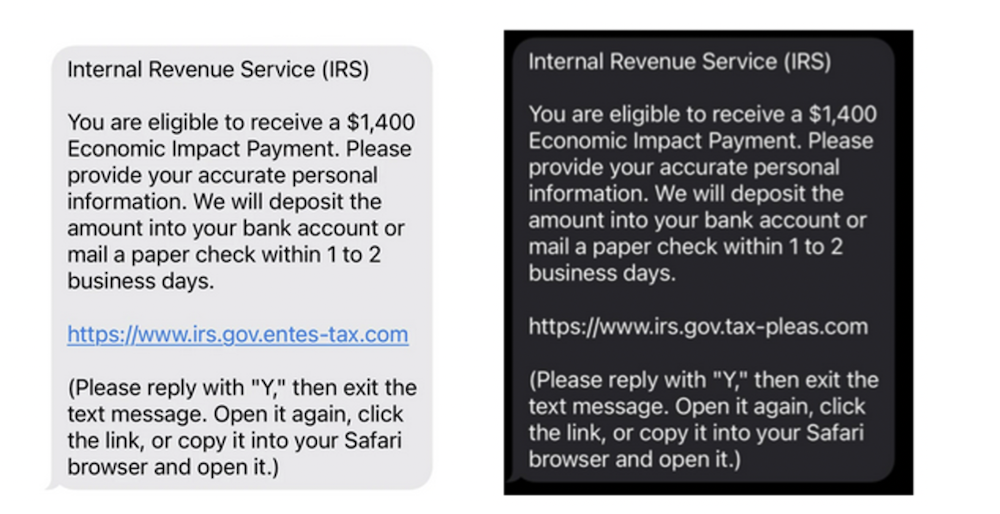
Scam texts that weave “irs.gov” into a malicious link
As for the text itself, scammers send urgent-sounding messages about tax returns like, “Your refund is on hold, contact the IRS immediately.” Other scammers use fear, leveling threats like jail time for non-payment. In other cases, scammers threaten to revoke things like driver’s licenses and business licenses, or even immigration status. According to the IRS, these are common signs of a scam. The IRS never uses threats or tactics like these to resolve tax issues.
The second punch comes by clicking the link in these messages, which leads to IRS copycat scam sites. And they can look convincing. The most sophisticated of them mirror the look and feel of the official IRS website and use URLs that look “close enough” to an IRS URL, which can trick anyone who doesn’t examine them closely.
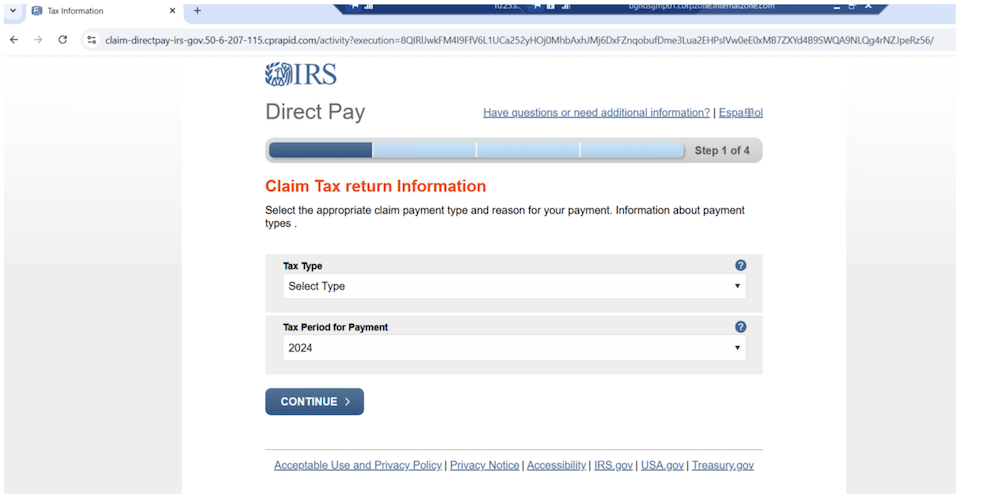
Example of a fake IRS claim website
And that’s where the damage gets done. Under the false pretense of receiving a refund or making a payment, the scammers collect that precious personal info we talked about, which can cause short- and long-term fallout for victims.
The same approach works for scammers who pose as tax prep services and tax software companies. The texts and websites look different, yet they’re still part of a scheme for collecting the same types of personal and financial info.
How To Avoid Tax Scams
Clever as these scams are, you can avoid them. The first step is awareness. By reading this article and sharing it with others, you spread the word about these scams and just how rampant they are.
From there, you can take several more steps that can keep you far safer during tax time:
- Be suspicious of emails and phone calls claiming to be from the IRS. The IRS typically contacts people by physical mail, not by email or text. (See their list of ways the IRS will contact you for more details.)
- Never give out personal info on the phone. The IRS will never call to ask for personal info over the phone, and no government agency will ever ask you for money over the phone. Payments demanded in money orders, gift cards, and online payment platforms other than IRS.gov are an absolute red flag.
- Go straight to the source. Verify all websites and emails, even when it looks like they come from a trusted tax consultant or partner. Go straight to the source instead of clicking on links in emails or texts.
- Remove your personal info from sketchy data broker sites. Scams over email, phone, and text all require something—your contact info. In many cases, scammers get it from data broker sites. Data brokers buy, collect, and sell detailed personal info, which they compile from several public and private sources. Our Personal Data Cleanup scans some of the riskiest data broker sites and shows you which ones are selling your personal info.
- Lastly, file your taxes as quickly as possible. One way to keep a scammer from claiming your refund is to claim it first. In some cases, taxpayers only find out they’ve been scammed once they file a return—only to discover that it’s already been filed.

Introducing McAfee+
Identity theft protection and privacy for your digital life.
