


[ad_1]
Mulch is one of the simplest tools a gardener can use to protect soil, suppress weeds, and reduce water loss. Yet it’s also one of the easiest things to get wrong. Many well-intentioned gardeners assume that if a little mulch is good, more must be better. In reality, over-mulching is the single most common mistake—and it can quietly harm plants, trees, and soil health.
Here’s how to figure out exactly how much mulch you need, when enough becomes too much, and how to avoid the problems that come from piling it on.
The Quick Answer: How Much Mulch Do I Need?
For most home gardens and landscapes, the ideal mulch depth is:
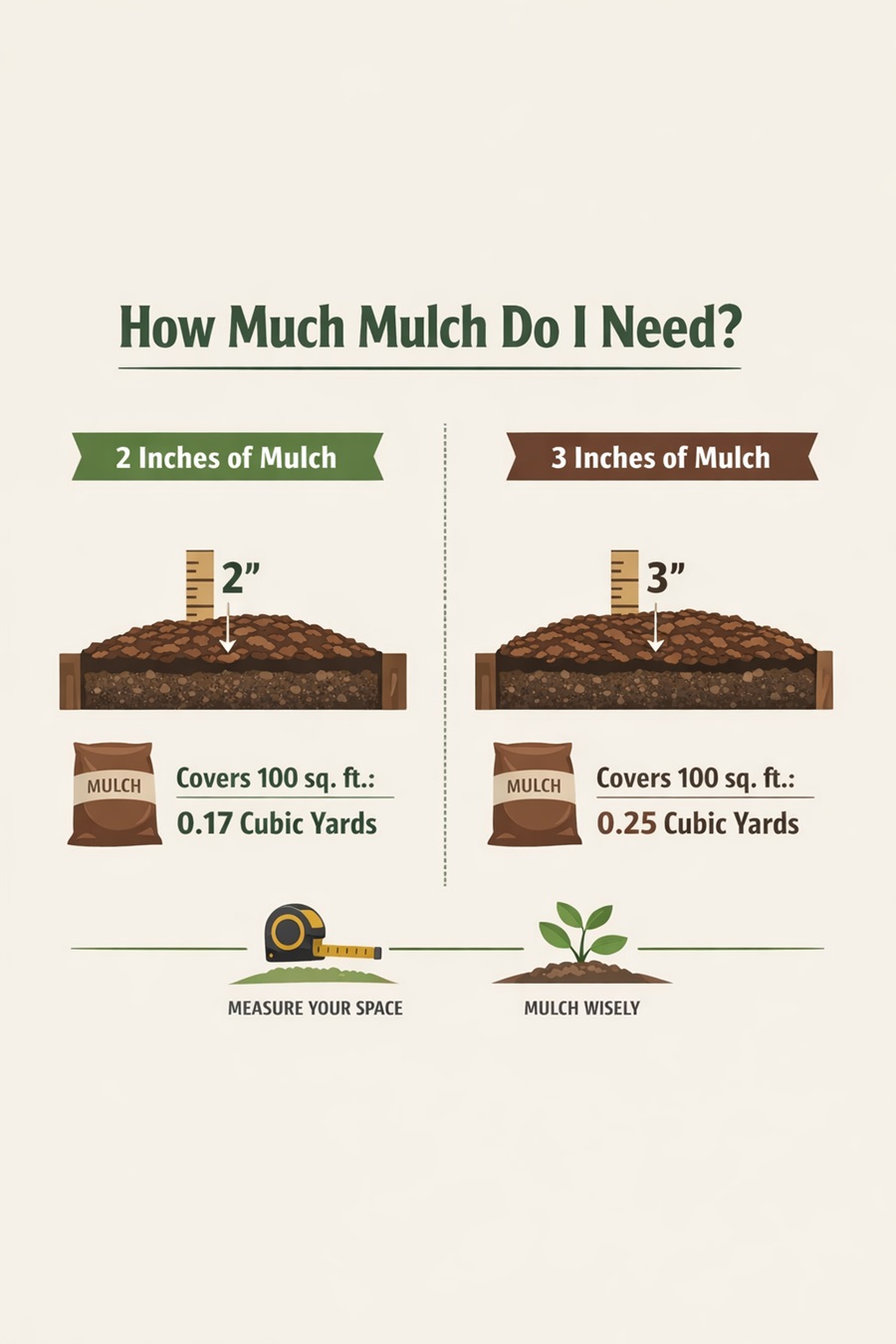
- 2 inches for flower beds and around established plants
- 3 inches for weed suppression in landscape beds
That works out to roughly:
- 0.17 cubic yards per 100 square feet at 2 inches
- 0.25 cubic yards per 100 square feet at 3 inches
Going beyond 3 inches rarely adds benefits—and often creates new problems.
Why Mulch Depth Matters More Than You Think
Mulch works by moderating what happens at the soil surface. A properly applied layer:
- Shields soil from direct sun and heat
- Slows evaporation and keeps moisture consistent
- Reduces weed germination
- Improves soil structure as organic mulch breaks down
But soil also needs oxygen and airflow. When mulch is applied too thickly, especially in fine or compacted materials, it can trap moisture, block air exchange, and stress plant roots. What looks tidy on the surface can quietly undermine plant health below.
Related and Recomended: How Many Bags of Mulch Are in a Yard?
How to Calculate How Much Mulch You Need
You don’t need advanced math—just a few simple steps.
Step 1: Measure the Area
Multiply length × width to get square footage.
Step 2: Choose the Right Depth
- 2 inches for most beds
- 3 inches where weed pressure is high
Step 3: Use the Standard Formula
Square feet × depth (in inches) ÷ 324 = cubic yards needed
If you’re buying bagged mulch, a standard 2-cubic-foot bag covers about 12 square feet at 2 inches.
Common Garden Sizes: What to Buy
- 10 × 10 ft bed (100 sq ft)
- 2 inches: ~0.17 cu yd (5–6 bags)
- 3 inches: ~0.25 cu yd (7–8 bags)
- 500 sq ft garden area
- 2 inches: ~0.85 cu yd
- 3 inches: ~1.25 cu yd
- 1,000 sq ft landscape bed
- 2 inches: ~1.7 cu yd
- 3 inches: ~2.5 cu yd
Buying slightly extra is fine—but spreading all of it isn’t always wise.
How Much Mulch Is Too Much?
Anything over 3 inches in most planting areas crosses into risky territory.
Signs You’ve Over-Mulched
- Mushrooms or sour, swampy smells
- Water pooling instead of soaking in
- Yellowing leaves despite adequate watering
- Bark damage or rot near plant bases
These are signs that roots aren’t getting enough oxygen.
The #1 Mulching Mistake: Mulch Volcanoes
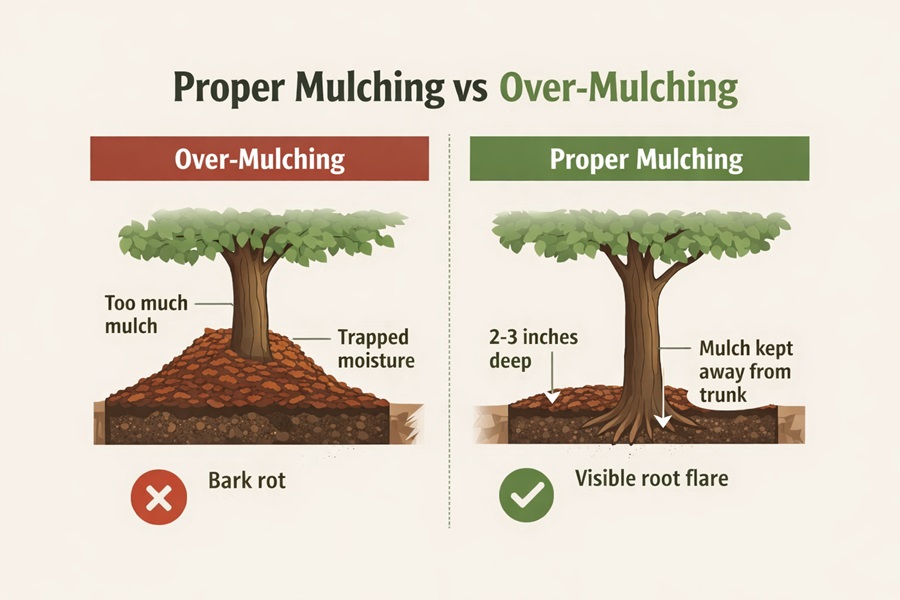
Piling mulch against tree trunks or plant stems—often called a mulch volcano—is one of the most damaging practices in home landscaping.
Why It’s Harmful
- Traps moisture against bark, leading to rot
- Encourages pests and fungal disease
- Forces roots to grow upward instead of outward
The Right Way
- Keep mulch 2–3 inches deep
- Pull mulch 2–3 inches away from trunks and stems
- Think donut, not volcano
Trees and shrubs thrive when their root flares are exposed and dry.
Mulch Depth by Garden Type
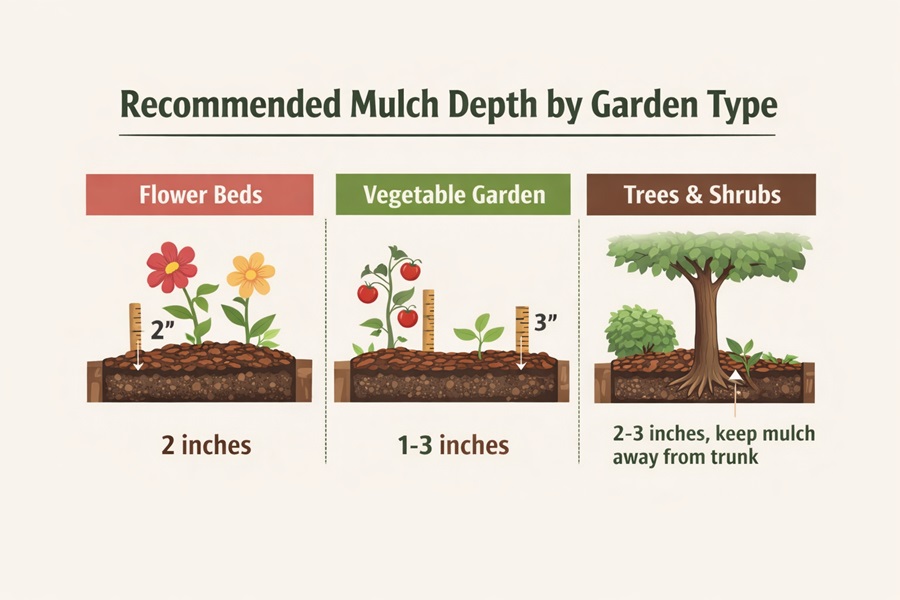
Flower Beds
A consistent 2 inches is usually enough. More can smother shallow-rooted perennials.
Vegetable Gardens
- 1–2 inches for young seedlings
- Up to 3 inches mid-season to control weeds and retain moisture
Too much mulch early can keep soil cool and slow growth.
Landscape Beds & Pathways
In non-planting areas, thicker mulch (3–4 inches) may be acceptable—but only where roots aren’t competing for oxygen.
Bagged vs Bulk Mulch: Which Is Better?
Bagged mulch is convenient for small projects and touch-ups.
Bulk mulch is usually more economical for large areas and offers more consistent coverage.
The key isn’t which you buy—it’s applying the right depth, regardless of volume.
What to Do If You’ve Already Over-Mulched
You don’t need to start over.
- Gently rake excess mulch away from plant bases
- Redistribute it to bare areas
- Compost unused material or save it for future touch-ups
Removing even one extra inch can restore airflow and improve plant health quickly.
Common Mulching Myths That Lead to Overuse
- “More mulch means less watering.”
Too much mulch can actually prevent water from reaching roots. - “Mulch should cover everything.”
Plant stems and tree trunks should remain exposed. - “Mulch never needs refreshing.”
Organic mulch breaks down and should be topped up lightly—not piled on.
Frequently Asked Questions About Mulch Depth
How much mulch do I need per square foot?
Most garden beds need 2–3 inches of mulch, which equals about 0.17–0.25 cubic yards per 100 square feet, depending on depth.
Is 4 inches of mulch too much?
In most cases, yes. Mulch deeper than 3 inches can restrict airflow, trap moisture, and increase the risk of root rot—especially around trees and shrubs.
Can you put too much mulch in a garden bed?
Yes. Over-mulching is common and can lead to yellowing plants, fungal growth, and shallow root systems. Proper depth matters more than volume.
How often should mulch be replaced?
Organic mulch typically needs refreshing once per year, adding only enough to restore proper depth—not to build layers.
Should mulch touch plant stems or tree trunks?
No. Mulch should be kept 2–3 inches away from stems and trunks to prevent rot and pest damage.
The Bottom Line
Mulch is a powerful ally in the garden—but only when used with restraint. For most landscapes, 2 to 3 inches is the sweet spot. Anything more risks turning a helpful practice into a hidden problem.
Measure before you buy, spread mulch evenly, and remember: healthy gardens are built on balance, not excess.
[ad_2]
Source link
