
Close Menu
  • Home
  • AI
  • Big Data
  • Cloud Computing
  • iOS Development
  • IoT
  • IT/ Cybersecurity
  • Tech
    • Nanotechnology
    • Green Technology
    • Apple
    • Software Development
    • Software Engineering

Subscribe to Updates

Get the latest technology news from Bigteetechhub about IT, Cybersecurity and Big Data.

    What's Hot

    The Download: How AI really works, and phasing out animal testing

    November 17, 2025

    Deep Network Troubleshooting: An Agentic AI Solution

    November 17, 2025

    Today’s NYT Connections: Sports Edition Hints, Answers for Nov. 17 #420

    November 17, 2025
    Facebook X (Twitter) Instagram
    Facebook X (Twitter) Instagram
    Big Tee Tech Hub
    • Home
    • AI
    • Big Data
    • Cloud Computing
    • iOS Development
    • IoT
    • IT/ Cybersecurity
    • Tech
      • Nanotechnology
      • Green Technology
      • Apple
      • Software Development
      • Software Engineering
    Big Tee Tech Hub
    Home»IT/ Cybersecurity»Iranian hackers targeted over 100 govt orgs with Phoenix backdoor
    IT/ Cybersecurity

    Iranian hackers targeted over 100 govt orgs with Phoenix backdoor

    big tee tech hubBy big tee tech hubOctober 23, 2025023 Mins Read
    Share Facebook Twitter Pinterest Copy Link LinkedIn Tumblr Email Telegram WhatsApp
    Follow Us
    Google News Flipboard
    Iranian hackers targeted over 100 govt orgs with Phoenix backdoor
    Share
    Facebook Twitter LinkedIn Pinterest Email Copy Link


    Iranian hackers targeted over 100 govt orgs with Phoenix backdoor

    State-sponsored Iranian hacker group MuddyWater has targeted more than 100 government entities in attacks that deployed version 4 of the Phoenix backdoor.

    The threat actor is also known as Static Kitten, Mercury, and Seedworm, and it typically targets government and private organizations in the Middle East region.

    Starting August 19, the hackers launched a phishing campaign from a compromised account that they accessed through the NordVPN service.

    The emails were sent to numerous government and international organizations in the Middle East and North Africa, cybersecurity company Group-IB says in a report today.

    According to the researchers, the threat actor took down the server and server-side command-and-control (C2) component on August 24, likely indicating a new stage of the attack that relied on other tools and malware to gather information from compromised systems.

    Most of the targets of this MuddyWater campaign are embassies, diplomatic missions, foreign affairs ministries, and consulates.
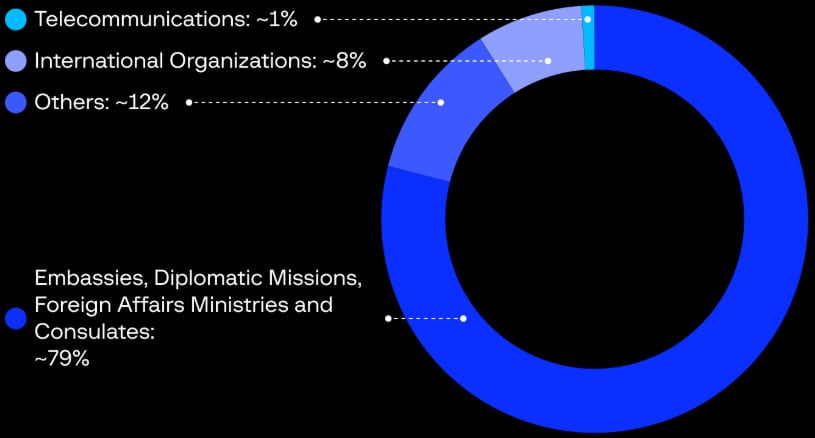
    Targets of latest MuddyWaters campaign
    Targets int the latest MuddyWaters campaign
    Source: Group-IB

    Back to macro attacks

    Group-IB’s research revealed that MuddyWater used emails with malicious Word documents with macro code that decoded and wrote to disk the FakeUpdate malware loader.

    The emails attach malicious Word documents that instruct recipients to “enable content” on Microsoft Office. This action triggers a VBA macro that writes the ‘FakeUpdate’ malware loader on the disk.

    It is unclear what prompted MuddyWater to deliver malware through macro code hidden in Office documents, since the technique was popular several years ago, when macros ran automatically upon opening a document.

    Since Microsoft disabled macros by default, threat actors moved to other methods, a more recent one being ClickFix, also used by MuddyWater in past campaigns.

    Group-IB researchers say that the loader in MuddyWater’s more recent attacks decrypts the Phoenix backdoor, which is an embedded, AES-encrypted payload.

    The malware is written to ‘C:\ProgramData\sysprocupdate.exe,’ and establishes persistence by modifying the Windows Registry entry with configurations for the current user, including the app that should run as the shell after logging into the system.
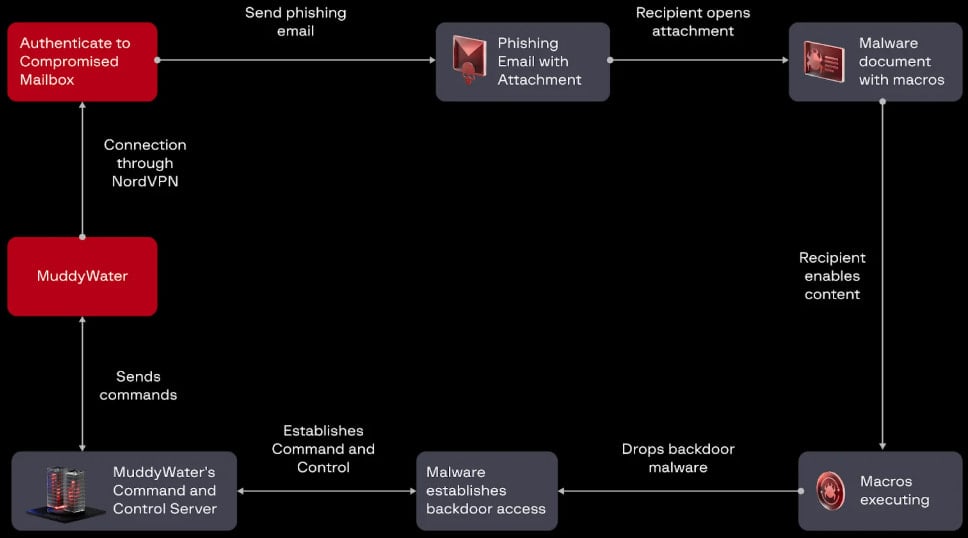
    Observed attack chain
    Observed attack chain
    Source: Group-IB

    Phoenix and Chrome stealer

    Phoenix backdoor has been documented in past MuddyWater attacks, and the variant used in this campaign, version 4, includes an additional COM-based persistence mechanism and several functional differences.
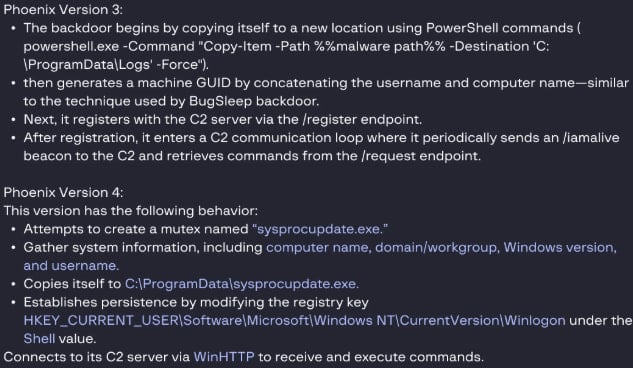
    Differences between Phoenix version 3 and version 4
    Differences between Phoenix version 3 and version 4
    Source: Group-IB

    The malware gathers information about the system, like computer name, domain, Windows version, and username, to profile the victim. It connects to its command-and-control (C2) via WinHTTP and starts to beacon and poll for commands.

    Group-IB has confirmed that the following commands are supported in Phoenix v4:

    • 65 — Sleep
    • 68 — Upload file
    • 85 — Download file
    • 67 — Start shell
    • 83 — Update sleep interval time

    Another tool MuddyWater used in these attacks is a custom infostealer that attempts to exfiltrate the database from Chrome, Opera, Brave, and Edge browsers, extract credentials, and snatch the master key to decrypt them.

    On MuddyWater’s C2 infrastructure the researchers also found the PDQ utility for software deployment and management, and the Action1 RMM (Remote Monitoring and Management) tool. PDQ has been used in attacks attributed to Iranian hackers.

    Group-IB attributes the attacks to MuddyWater with high confidence, based on the use of malware families and macros seen in past campaigns, the use of common string decoding techniques on new malware similar to previously used families, and their specific targeting patterns.

    Picus Blue Report 2025

    46% of environments had passwords cracked, nearly doubling from 25% last year.

    Get the Picus Blue Report 2025 now for a comprehensive look at more findings on prevention, detection, and data exfiltration trends.


    Source link

    Backdoor govt hackers Iranian orgs Phoenix targeted
    Follow on Google News Follow on Flipboard
    Share. Facebook Twitter Pinterest LinkedIn Tumblr Email Copy Link
    tonirufai
    big tee tech hub
    • Website

    Related Posts

    Microsoft Patch Tuesday, November 2025 Edition – Krebs on Security

    November 16, 2025

    Can password managers get hacked? Here’s what to know

    November 16, 2025

    The Stars Scammers Love Most: McAfee Reveals World’s Most Deepfaked Celebs

    November 15, 2025
    Add A Comment
    Leave A Reply Cancel Reply

    Editors Picks

    The Download: How AI really works, and phasing out animal testing

    November 17, 2025

    Deep Network Troubleshooting: An Agentic AI Solution

    November 17, 2025

    Today’s NYT Connections: Sports Edition Hints, Answers for Nov. 17 #420

    November 17, 2025

    ZnO Nanoparticles with 2 % Silver: A Game-Changer for Sensing

    November 17, 2025
    About Us
    About Us

    Welcome To big tee tech hub. Big tee tech hub is a Professional seo tools Platform. Here we will provide you only interesting content, which you will like very much. We’re dedicated to providing you the best of seo tools, with a focus on dependability and tools. We’re working to turn our passion for seo tools into a booming online website. We hope you enjoy our seo tools as much as we enjoy offering them to you.

    Don't Miss!

    The Download: How AI really works, and phasing out animal testing

    November 17, 2025

    Deep Network Troubleshooting: An Agentic AI Solution

    November 17, 2025

    Subscribe to Updates

    Get the latest technology news from Bigteetechhub about IT, Cybersecurity and Big Data.

      • About Us
      • Contact Us
      • Disclaimer
      • Privacy Policy
      • Terms and Conditions
      © 2025 bigteetechhub.All Right Reserved

      Type above and press Enter to search. Press Esc to cancel.