


Using orange leaf extract, researchers have fine-tuned a green method to produce antibacterial copper oxide nanoparticles, further boosting their performance by embedding them in chitosan.
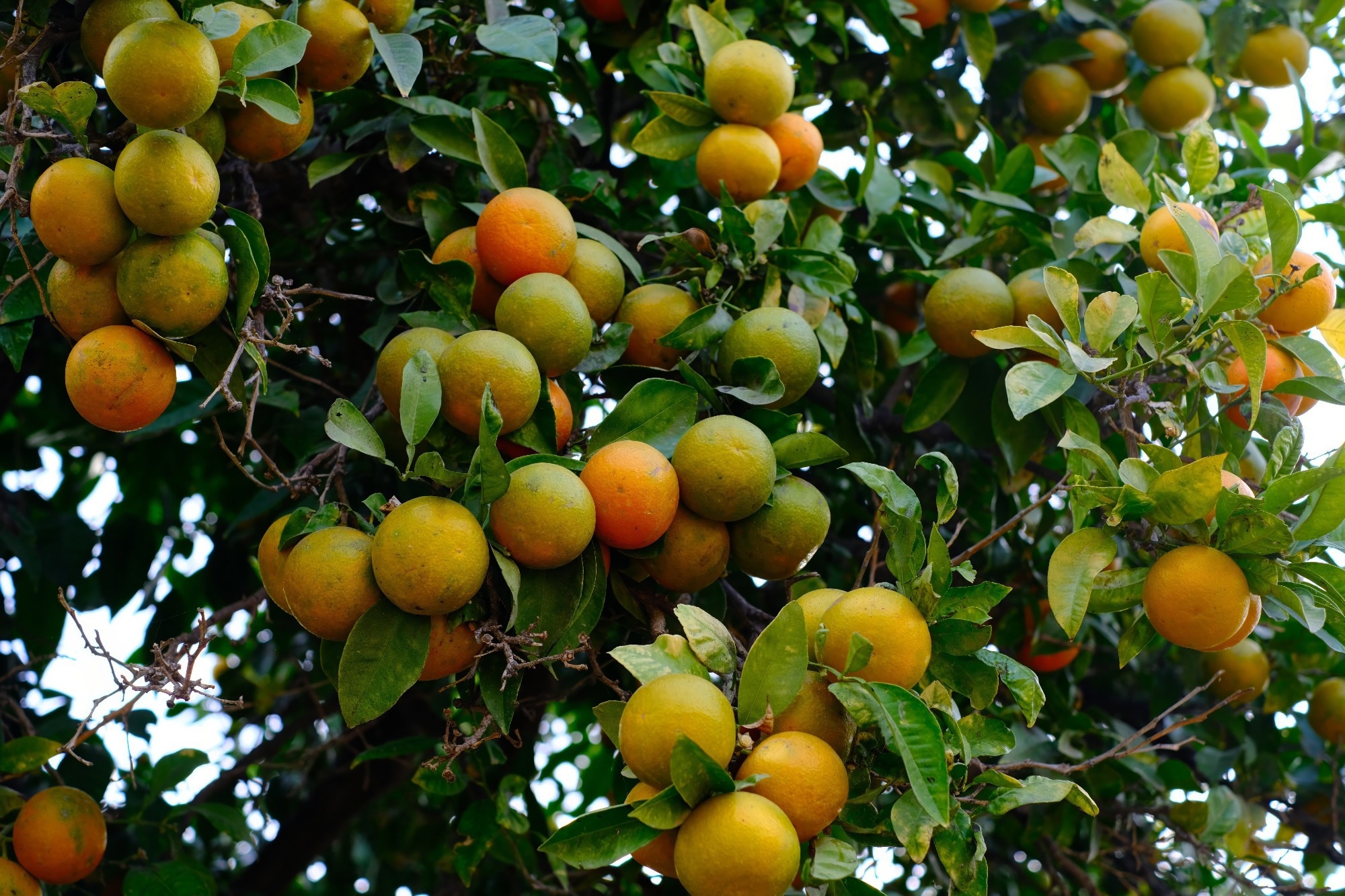 Study: Green Synthesis of Copper Oxide Nanoparticles Using Citrus sinensis Leaves: Effects of Experimental Parameters, Antimicrobial Evaluation and Development of Chitosan Composites. Image Credit: Viktoriia Kokhanevych/Shutterstock.com
The scientists optimized the green synthesis of copper oxide nanoparticles (CuONPs) from Citrus sinensis leaf extract, showing that combining them with chitosan improves their antibacterial performance.
Saving this for later? Download a PDF here.
CuONPs are used in antimicrobial coatings, sensors, and catalysis, but standard syntheses often rely on harsh chemicals and can generate unwanted byproducts. Plant-based synthesis can be a cleaner alternative with natural metabolites as reducing and stabilizing agents.
In this study, orange leaves stood out for their high phenolic content, antioxidant activity, and chemically diverse metabolites. The authors note, however, that plant-mediated synthesis still depends on metal precursor salts and often requires pH adjustment to drive nanoparticle formation.
Conducting the Orange Leaf Study
The researchers prepared C. sinensis leaf extracts from fresh and dried leaves using water or ethanol/water mixtures under different extraction conditions. They then measured total phenolic content to identify the most suitable extract for nanoparticle synthesis.
The best result came from dried, ground leaves extracted in water at 70 °C for 30 minutes, yielding about 400 μg GAE/mL of phenolics and roughly 80 % DPPH radical scavenging activity.
For nanoparticle synthesis, the team compared copper(II) nitrate and copper(II) acetate across different pH values, precursor concentrations, and calcination temperatures.
The resulting materials were analyzed by electron microscopy and X-ray diffraction, while cyclic voltammetry was used to examine how copper ions interacted with plant metabolites during formation.
Antibacterial activity was tested against Gram-negative Escherichia coli and Gram-positive Staphylococcus aureus using disc diffusion and liquid-medium assays based on CLSI protocols. CuONPs produced under the optimized conditions were then incorporated into chitosan to form composite pellets.
Strongest Antibacterial Activity at pH 7
The most effective synthesis conditions were pH 7.0, 10.0 g/L copper(II) acetate monohydrate, and calcination at 300 °C. Under those conditions, copper acetate produced a more CuO-dominant material and stronger antibacterial activity than copper nitrate.
Trace amounts of Cu2O could still be present, but the paper notes that this did not appear to weaken antimicrobial performance.
The electrochemical data suggest that neutral pH supports Cu(II) complexation and copper-species transformation rather than immediate reduction.
The authors proposed a reaction pathway involving plant metabolites and used eriocitrin as a representative model compound, while stopping short of claiming a single definitively identified active reductant.
Electron microscopy showed a heterogeneous, strongly aggregated material with no well-defined particle shape. Sizes ranged from about 1 to 110 nm, although most particles fell between 20 and 30 nm.
In antibacterial tests, CuONPs inhibited both E. coli and S. aureus, with the acetate-derived particles performing better, particularly against E. coli. The study links this activity to copper ion release, oxidative stress, and membrane damage, though it did not present a full MIC/MBC-style quantitative analysis.
When incorporated into chitosan, the CuONPs produced composite pellets with stronger antibacterial activity than chitosan alone, suggesting a synergistic interaction between the polymer and the nanoparticles.
Future Work and Optimizing CuONP Production
The study provides a systematically optimized, environmentally conscious route for producing antibacterial CuONPs from C. sinensis leaves and shows that they can be integrated into chitosan composites with improved performance.
Even so, the work remains at the laboratory stage. The composites were tested under controlled conditions rather than realistic operating environments, and further studies are still needed on stability, reusability, copper release, and performance in complex wastewater-like systems before practical use can be assessed.
Journal Reference
Bortoluz J., et al. (2026). Green Synthesis of Copper Oxide Nanoparticles Using Citrus sinensis Leaves: Effects of Experimental Parameters, Antimicrobial Evaluation and Development of Chitosan Composites. Nanomaterials 16(6):369. DOI: 10.3390/nano16060369
