


[ad_1]
Extreme weather and rising energy costs have made backup power a real need for many homes. In the past, people relied on gas or diesel generators. But these machines are loud, dirty, and require constant fuel and upkeep.
Solar generators offer a cleaner and easier option. They provide quiet, emission-free power during an outage, and they work without gas or fumes. For many homeowners, they are becoming the go-to choice for safe and reliable backup power.
This guide gives you a clear overview of how solar generators work, what features matter most, real examples of how long they can run, cost comparisons, and situations where solar may not be the best fit. It is a simple and practical starting point to help you decide before you buy.
Why Home Backup Power Matters More Than Ever
Homeowners worldwide are seeing:
- More frequent grid outages caused by hurricanes, storms, heatwaves, and aging infrastructure
- Higher utility bills, making energy independence more appealing
- Growing household electricity demand (remote work equipment, cooling devices, medical devices)
During blackouts, backup power becomes essential for:
- Refrigerators and freezers
- Medical devices (CPAP, oxygen concentrators)
- Communication equipment (Wi-Fi, phones, laptops)
- Essential lighting
- Fans or small space heaters
- Sump pumps, routers, and home security systems
Fossil-fuel generators can supply power, but they also produce emissions, noise, and ongoing costs. Solar generator offers the same functionality—without the downside.
The Environmental Case for Solar Generators
Solar generators are one of the cleanest home backup solutions available.
- Zero Operational Emissions
According to the EPA, gas generators emit:
- Carbon monoxide
- Nitrogen oxides
- Volatile organic compounds
- Particulate matter
Solar generators produce no emissions during operation.
- Silent Backup Power
Gas generators operate at 70–90 dB—similar to a lawnmower.
Solar generators operate at <5 dB—virtually silent.
- Powered by Renewable Energy
Every recharge from the sun reduces reliance on fossil fuels.
- Low Maintenance & Long Lifespan
Solar generators have few moving parts—no oil changes, fuel stabilizers, spark plugs, or carburetor issues.
- Long Battery Life (LiFePO4 Technology)
LiFePO4 batteries offer:
- 3,000–6,000 charge cycles
- 10–12+ years lifespan
- Higher thermal stability and safety
How Solar Generators Work
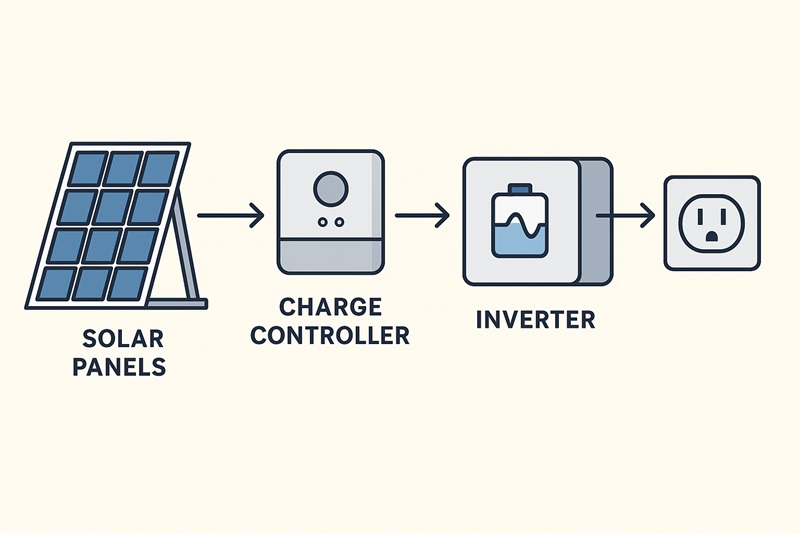
A solar generator is a portable or semi-permanent backup system made of:
- Solar panels – collect sunlight
- Charge controller – regulates the energy flow
- Battery (LiFePO4 or lithium-ion) – stores energy
- Inverter – converts DC battery power into AC electricity for home devices
During an outage, your appliances draw electricity from the battery. As long as sunlight is available, the system can recharge itself.
What Size Solar Generator Do You Need?
Below is a practical runtime reference chart to help you understand what different battery sizes can support.
Essential Appliance Runtime Estimates
(Based on average watt consumption and 80% usable battery capacity)
| Appliance | Avg Watts | 1000Wh | 2000Wh | 3000Wh |
| Refrigerator | 150W | ~5 hrs | ~11 hrs | ~17 hrs |
| CPAP Machine | 40W | ~20 hrs | ~40 hrs | ~60 hrs |
| WiFi Router | 12W | ~65 hrs | ~130 hrs | ~195 hrs |
| Laptop | 60W | ~13 hrs | ~27 hrs | ~40 hrs |
| LED Light Bulb | 10W | ~80 hrs | ~160 hrs | ~240 hrs |
| Phone Charging | 10Wh | 50+ charges | 100+ | 150+ |
| Small Fan | 50W | ~16 hrs | ~32 hrs | ~48 hrs |
Choosing the Best Solar Generator for Your Home
- Battery Capacity (Wh or kWh)
Higher capacity = longer runtime.
- Emergency essentials: 1,000–1,500Wh
- Daily backup: 2,000–3,000Wh
- Whole-home lite backup: 3,000–6,000Wh
- Inverter Output (W)
Determines how many appliances can run at once:
- 1,200–2,400W → basic essentials
- 3,000W+ → refrigerators + power tools + medical devices
- Solar Input Capacity
Faster solar input = faster recharge.
Look for:
- 400W–800W input for small systems
- 1000W–2400W input for larger home backup units
- Battery Chemistry
LiFePO4 is ideal because it offers:
- 3–4× longer lifespan
- Better safety
- Higher efficiency
- Expandability
The best systems allow:
- Add-on batteries
- Additional solar panels
- 240V split-phase pairing for larger home loads
- Port Selection
Look for:
- Multiple AC outlets
- USB-C PD ports
- DC carport
- RV/TT-30 ports
Are Solar Generators Ideal for Home Backup? (When They Work Best)
Solar generators excel in scenarios like:
- Nighttime emergency power
- Hospital-at-home setups (CPAP, oxygen machines)
- Refrigeration protection
- Storm or hurricane readiness
- Off-grid cabins, RVs, and tiny homes
- Homes with rooftop solar
Advantages
- Clean, quiet, zero-emission backup
- No reliance on fuel supply chains
- Lower long-term cost
- Works even during multi-day outages with sunlight
- Safe indoors
Limitations You Should Know
Solar generators are excellent—but not perfect.
- Not ideal for whole-home heavy loads
Cannot power:
- Central AC
- Electric stoves
- Electric dryers
- High-watt heaters
- Slower recharging in cloudy climates
A storm may reduce solar input by 60–90%.
- Higher upfront cost
A quality home backup system may cost:
- $1,000–$3,000 for mid-range
- $3,000–$7,000 for high-capacity systems
- Requires panel placement
You need:
- A yard, roof, or balcony
- Proper south-facing positioning (in Northern Hemisphere)
Solar vs Gas Generator (Clear ROI)
| Cost Factor | Solar Generator | Gas Generator |
| Purchase Price | $800–$6,000 | $300–$2,500 |
| Fuel Cost | $0 | $2–$8/day |
| Maintenance | Very low | High (oil, filters, stabilizers) |
| Noise | Silent | 70–90 dB |
| Indoor Safe? | Yes | No |
| Lifespan | 10–15 years | 5–7 years |
| Emissions | Zero | High (EPA regulated) |
Long-term: Solar generators cost more upfront but save hundreds to thousands over their lifespan.
How to Get the Most From Your Solar Backup System
- Run only essential devices
- Use energy-efficient appliances
- Replace incandescent bulbs with LEDs
- Keep panels in full sun
- Use smart plugs to reduce phantom loads
- Charge devices during peak sunlight hours
- Add extra panels for faster recharging
Small changes can add hours of additional runtime.
FAQs
- Can a solar generator power an entire house?
Not typically. It can support essential circuits but not heavy appliances unless paired with large batteries + split-phase inverters.
- Do solar generators work at night?
Yes—using stored battery energy. They only recharge during daylight.
- How long do LiFePO4 batteries last?
Usually 10–12 years or 3,000–6,000 cycles.
- Can solar generators run a refrigerator?
Yes. A 2000Wh model can power a fridge for 10–15 hours per charge.
- Are solar generators safe indoors?
Yes—no fumes, no fuel, no carbon monoxide.
Conclusion
Backup power is no longer a luxury—it’s a necessity in an increasingly unpredictable climate. A solar generator offers a clean, silent, and dependable way to keep your home running while reducing your carbon footprint.
By choosing the right system—supported by real data, proper sizing, runtime expectations, and transparent limitations—you gain peace of mind and contribute to a more resilient, sustainable future.
[ad_2]
Source link
